Table of Contents
- Why Workplace Communication Matters
- The Hidden Costs of Poor Communication
- 1. Reduced Employee Productivity
- 2. Increased Workplace Errors
- 3. Missed Opportunities
- 4. Employee Frustration and Stress
- How Poor Communication Affects Team Collaboration
- The Impact on Workplace Culture
- Communication and Employee Engagement
- Common Communication Mistakes Organizations Make
- Assuming Everyone Understands
- Too Many Communication Channels
- Lack of Feedback
- Unclear Expectations
- The Financial Cost of Poor Communication
- Strategies for Better Workplace Communication
- Encourage Open Communication
- Provide Regular Updates
- Focus on Active Listening
- Simplify Communication
- Encourage Collaboration
- Benefits of Strong Internal Communication
- Higher Productivity
- Better Team Performance
- Improved Employee Satisfaction
- Stronger Workplace Culture
- Faster Decision-Making
- The Future of Workplace Communication
- Frequently Asked Questions (FAQs)
- Why is workplace communication important?
- How does poor communication affect productivity?
- What are common workplace communication challenges?
- How can organizations improve communication?
- Why is communication important for team collaboration?
- How does communication impact workplace culture?
- Conclusion
In every organization, communication is the foundation that keeps teams connected, projects moving, and goals aligned. Whether it's a quick update, an important announcement, or a collaborative discussion, effective workplace communication plays a critical role in daily operations.
However, many organizations underestimate the true cost of poor communication.
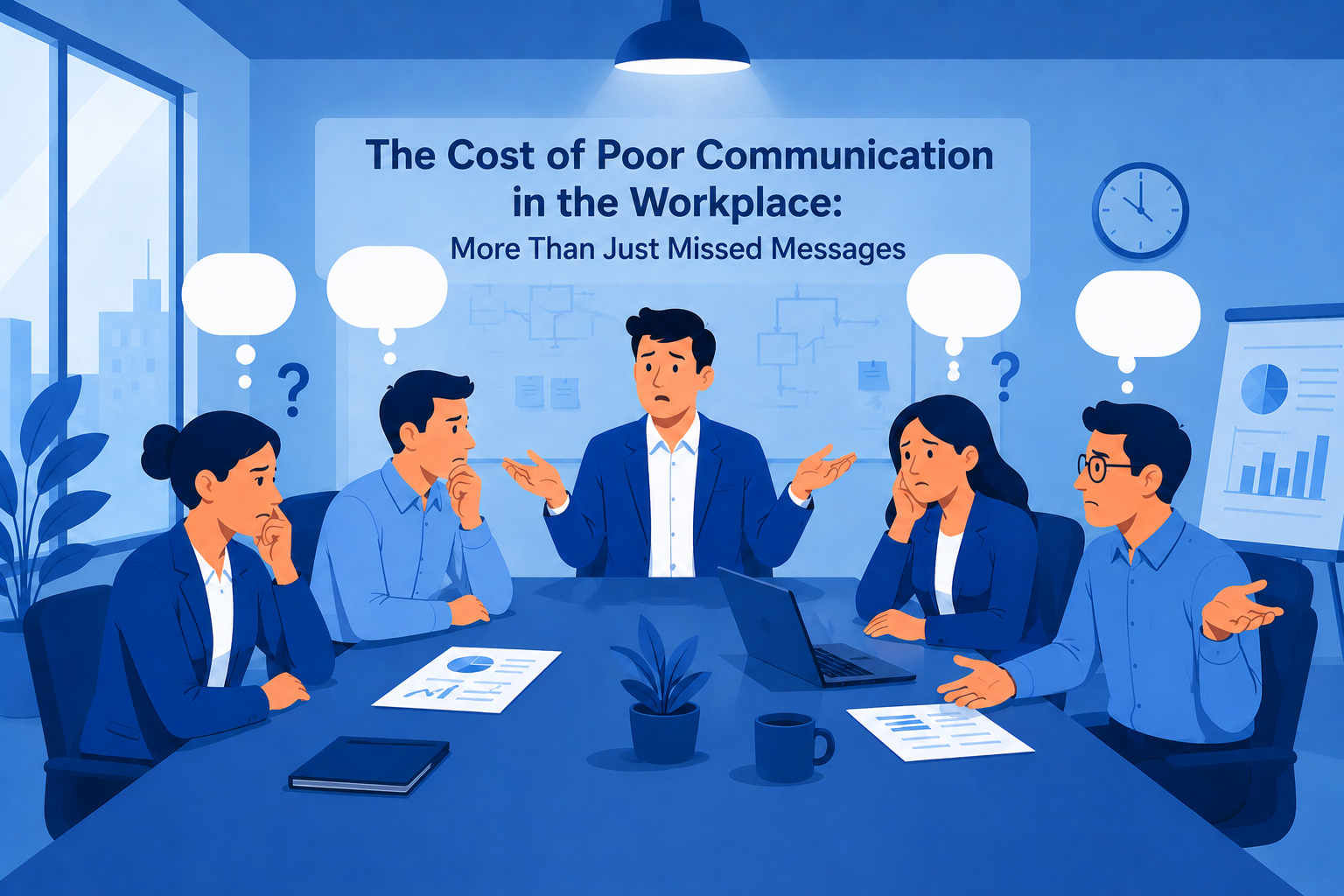
Communication problems are often viewed as minor issues, but their impact can be significant. Misunderstandings, delayed responses, unclear instructions, and lack of information sharing can affect productivity, employee engagement, workplace culture, and overall performance.
Poor communication costs organizations valuable time, resources, and opportunities every day.
In today's fast-paced work environment, strong communication is no longer a soft skill—it is a business necessity.
Why Workplace Communication Matters
Workplace communication is the process of sharing information, ideas, updates, and feedback between employees, teams, and leadership.
Good communication helps organizations:
- Improve collaboration
- Increase productivity
- Reduce errors
- Build stronger relationships
- Create a positive workplace culture
- Improve decision-making
When communication is effective, employees understand expectations, stay informed, and work together more efficiently.
The Hidden Costs of Poor Communication
Many organizations only notice communication issues when major problems arise. However, the hidden costs often accumulate slowly over time.
1. Reduced Employee Productivity
One of the biggest consequences of poor communication is reduced productivity.
Employees waste valuable time:
- Searching for information
- Clarifying instructions
- Following up on unanswered messages
- Correcting misunderstandings
When communication is unclear, work takes longer to complete.
Even small communication gaps can create delays that impact entire teams.
2. Increased Workplace Errors
Miscommunication often leads to mistakes.
Common examples include:
- Incorrect project requirements
- Missed deadlines
- Data entry errors
- Duplicate work
- Customer service issues
These errors require additional time and resources to fix.
Clear communication helps reduce confusion and improve accuracy across departments.
3. Missed Opportunities
Poor communication can cause organizations to miss valuable opportunities.
Examples include:
- Delayed project decisions
- Missed client requests
- Lost sales opportunities
- Slow responses to market changes
When information does not flow efficiently, organizations struggle to react quickly.
In competitive industries, speed and communication often determine success.
4. Employee Frustration and Stress
Communication problems create unnecessary workplace stress.
Employees become frustrated when:
- Information is inconsistent
- Expectations are unclear
- Updates are delayed
- Feedback is missing
Over time, this can negatively affect morale and job satisfaction.
A workplace with strong communication creates a more supportive and positive environment.
How Poor Communication Affects Team Collaboration
Team collaboration depends heavily on communication.
Without effective communication, teams may experience:
- Confusion about responsibilities
- Project delays
- Duplicate efforts
- Lack of accountability
- Relationship conflicts
Successful collaboration requires transparency and regular information sharing.
Employees work better when everyone understands goals, priorities, and expectations.
The Impact on Workplace Culture
Workplace culture is shaped by how people communicate.
Organizations with poor communication often experience:
- Lower trust levels
- Increased conflict
- Reduced engagement
- Lack of transparency
- Limited collaboration
Employees want to feel informed, heard, and valued.
Strong communication helps build trust between leadership and employees.
A positive workplace culture encourages teamwork, innovation, and long-term commitment.
Communication and Employee Engagement
Employee engagement is directly connected to communication.
Employees are more engaged when they:
- Receive regular updates
- Understand organizational goals
- Feel comfortable sharing ideas
- Receive meaningful feedback
Poor communication often leaves employees feeling disconnected from the organization.
Engaged employees are more productive, motivated, and committed to success.
Common Communication Mistakes Organizations Make
Assuming Everyone Understands
Leaders sometimes assume information is understood after a single message.
In reality, employees may need:
- Clarification
- Context
- Follow-up communication
Clear communication often requires repetition and reinforcement.
Too Many Communication Channels
Using too many communication methods can create confusion.
Employees may receive updates through:
- Emails
- Messaging apps
- Meetings
- Phone calls
- Documents
Important information can easily get lost.
Consistency is essential.
Lack of Feedback
Communication should always be two-way.
Employees need opportunities to:
- Ask questions
- Share concerns
- Provide feedback
Without feedback, communication becomes ineffective.
Unclear Expectations
Many workplace problems occur because expectations are not clearly communicated.
Employees perform better when they understand:
- Goals
- Deadlines
- Responsibilities
- Performance expectations
Clarity reduces confusion and improves accountability.
The Financial Cost of Poor Communication
Communication issues can also create significant financial costs.
Organizations may experience:
- Lower productivity
- Higher employee turnover
- Increased project delays
- Customer dissatisfaction
- Operational inefficiencies
Research consistently shows that communication problems can cost organizations thousands of hours annually.
Improving communication often delivers measurable business benefits.
Strategies for Better Workplace Communication
Encourage Open Communication
Employees should feel comfortable:
- Asking questions
- Sharing ideas
- Discussing challenges
Open communication creates stronger relationships and better collaboration.
Provide Regular Updates
Regular communication helps employees stay informed about:
- Organizational goals
- Team priorities
- Project progress
- Important changes
Consistency improves alignment across teams.
Focus on Active Listening
Good communication is not only about speaking.
Active listening helps employees:
- Understand information better
- Build stronger relationships
- Reduce misunderstandings
Listening is one of the most important workplace communication skills.
Simplify Communication
Messages should be:
- Clear
- Direct
- Concise
- Easy to understand
Complicated communication often creates unnecessary confusion.
Encourage Collaboration
Organizations should create opportunities for employees to:
- Share knowledge
- Work together
- Solve problems collectively
Collaboration strengthens communication and improves team performance.
Benefits of Strong Internal Communication
Organizations that prioritize communication often experience:
Higher Productivity
Employees spend less time searching for information and more time completing meaningful work.
Better Team Performance
Clear communication improves coordination and accountability.
Improved Employee Satisfaction
Employees feel more valued and connected when communication is transparent.
Stronger Workplace Culture
Communication builds trust, collaboration, and engagement.
Faster Decision-Making
Information flows more efficiently, allowing teams to respond quickly.
The Future of Workplace Communication
Modern workplaces continue to evolve.
Future communication trends include:
- Real-time collaboration
- Digital workplaces
- Hybrid work communication
- Employee engagement initiatives
- Knowledge-sharing environments
Organizations that invest in better communication practices will be better prepared for future workplace challenges.
Communication will remain one of the most important drivers of workplace success.
Frequently Asked Questions (FAQs)
Why is workplace communication important?
Workplace communication helps improve productivity, collaboration, employee engagement, and operational efficiency.
How does poor communication affect productivity?
Employees spend more time correcting mistakes, seeking information, and resolving misunderstandings.
What are common workplace communication challenges?
Common challenges include unclear expectations, delayed responses, information overload, and lack of feedback.
How can organizations improve communication?
Organizations can improve communication through clear messaging, regular updates, active listening, and open feedback channels.
Why is communication important for team collaboration?
Communication helps teams coordinate tasks, share information, and work toward common goals.
How does communication impact workplace culture?
Strong communication builds trust, transparency, and employee engagement, creating a healthier workplace culture.
Conclusion
Poor communication is far more costly than most organizations realize.
It affects productivity, collaboration, employee engagement, workplace culture, and overall performance. Small communication problems can quickly grow into larger operational challenges if they are not addressed.
Organizations that prioritize clear, consistent, and transparent communication create stronger teams, happier employees, and more efficient workplaces.
In today's workplace, success is not just about working harder—it is about communicating better.
Learn More: https://i-spur.com/#products