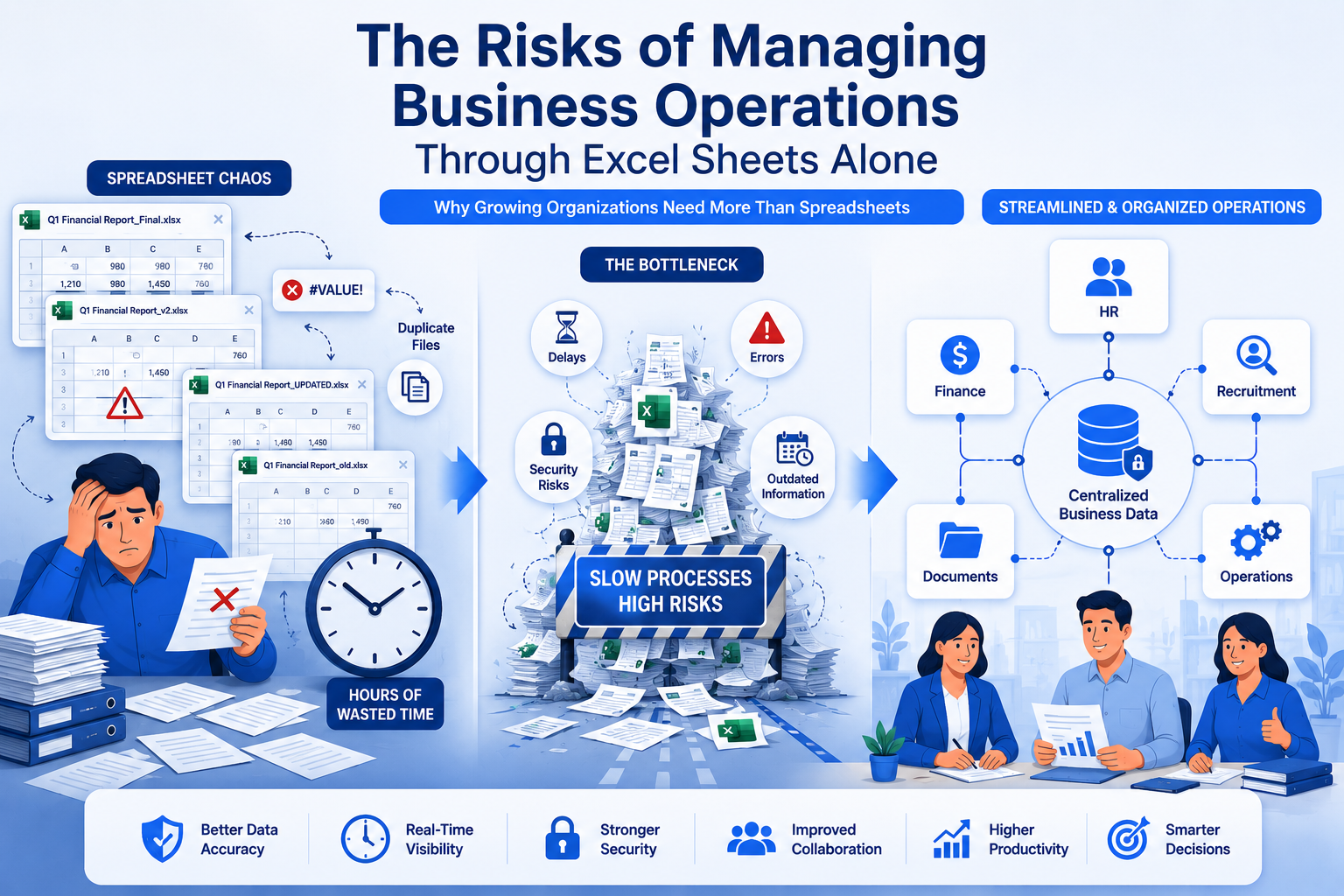
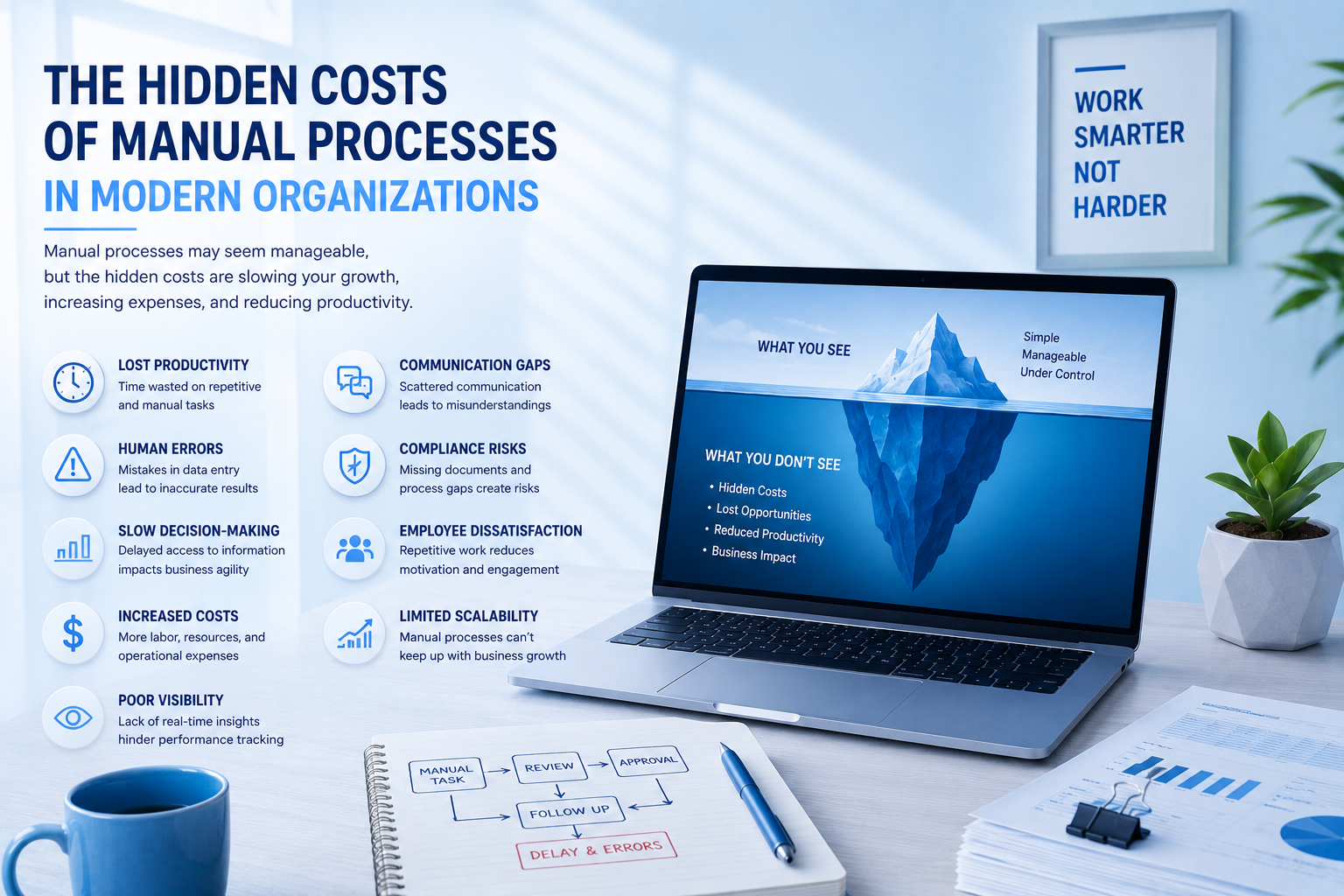
In today's fast-moving digital world, organizations are constantly looking for ways to improve efficiency, reduce operational costs, and stay competitive. While many companies invest heavily in marketing, infrastructure, and talent acquisition, one hidden challenge often goes unnoticed — manual processes.
Many organizations still rely on spreadsheets, paperwork, emails, physical approvals, and disconnected systems to manage daily operations. While these methods may seem manageable initially, they often create hidden costs that affect productivity, employee satisfaction, customer experience, and overall growth.
Understanding these hidden costs is essential for organizations that want to improve operational efficiency and build a more productive workplace.
What Are Manual Processes?
Manual processes are tasks that require human intervention at every stage rather than being streamlined through digital systems or automation.
Examples include:
- Manual attendance tracking
- Spreadsheet-based reporting
- Paper approval workflows
- Physical document management
- Manual invoice processing
- Email-based task tracking
- Handwritten records
- Manual data entry
Although these processes may appear inexpensive, they often create significant hidden costs over time.
Why Organizations Continue Using Manual Processes
Many organizations continue relying on manual workflows because:
- Employees are familiar with existing methods
- Initial automation costs seem high
- Management underestimates inefficiencies
- Existing systems have been used for years
- Teams resist operational changes
However, as organizations grow, these manual systems often become major obstacles to efficiency and scalability.
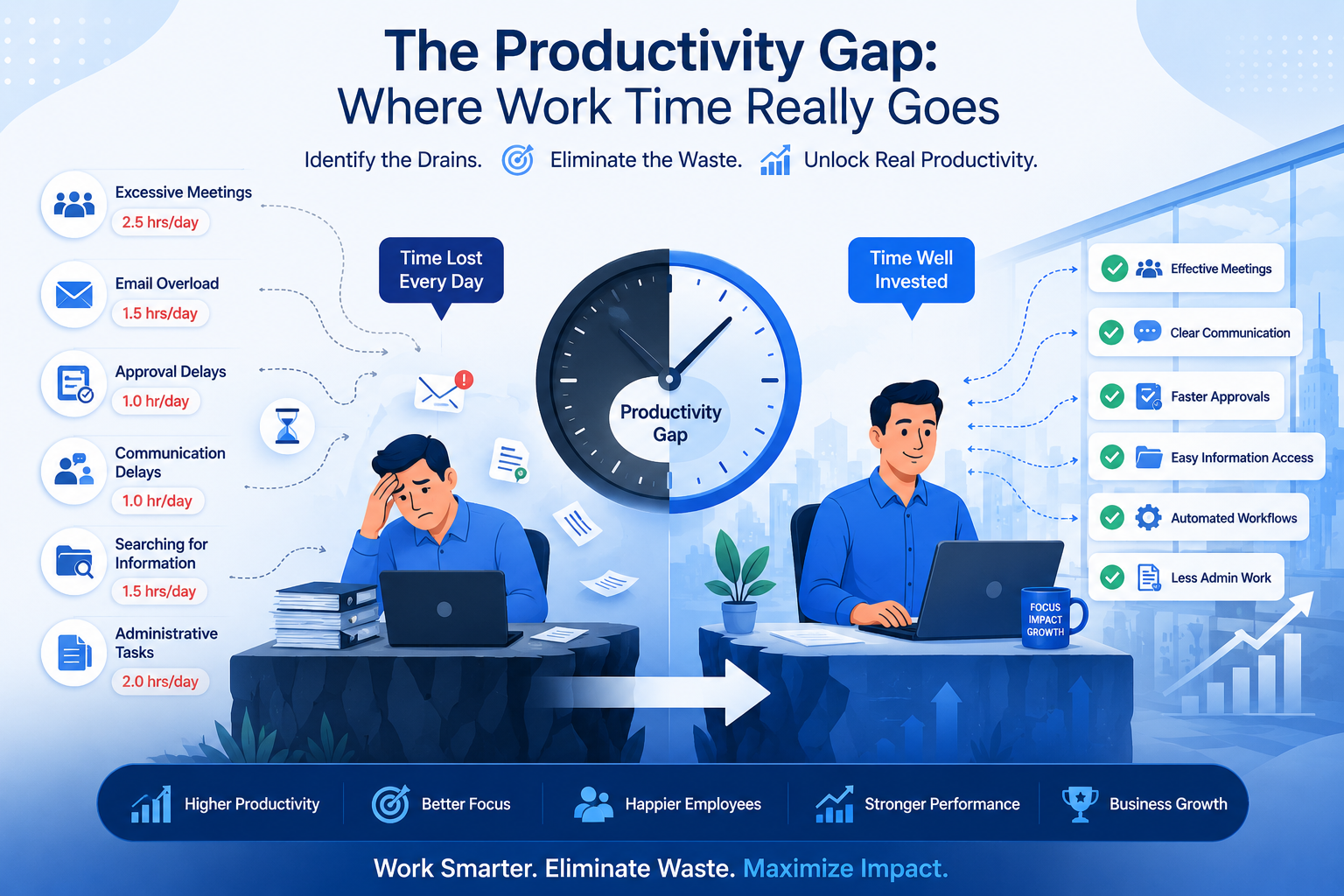
Hidden Cost #1: Lost Productivity
One of the biggest costs of manual processes is lost productivity.
Employees spend valuable hours every week performing repetitive tasks such as:
- Entering data
- Updating spreadsheets
- Searching for files
- Tracking approvals
- Creating manual reports
These activities consume time that could be spent on higher-value work.
Example
If an employee spends two hours daily updating spreadsheets, that equals:
- 10 hours per week
- 40 hours per month
- 480 hours per year
Multiply that across multiple departments, and the productivity loss becomes significant.
Hidden Cost #2: Human Errors
Manual work increases the likelihood of mistakes.
Common errors include:
- Incorrect data entry
- Duplicate records
- Payroll calculation mistakes
- Invoice mismatches
- Reporting inaccuracies
Even small errors can create larger operational problems.
Consequences may include:
- Financial losses
- Delayed decisions
- Employee dissatisfaction
- Customer complaints
Organizations often underestimate how costly these errors become over time.
Hidden Cost #3: Slow Decision-Making
Modern organizations depend on accurate and timely information.
When data is stored across spreadsheets, emails, and paper documents, decision-making becomes slower.
Managers may spend hours collecting information before they can:
- Review performance
- Approve budgets
- Monitor operations
- Evaluate productivity
Delayed access to information often leads to slower business responses and missed opportunities.
Hidden Cost #4: Poor Employee Experience
Employees today expect efficient workplaces.
Constantly dealing with:
- Repetitive paperwork
- Multiple spreadsheets
- Approval delays
- Information confusion
can create frustration.
Poor employee experiences often lead to:
- Lower engagement
- Reduced motivation
- Higher turnover
- Increased workplace stress
Organizations that simplify daily workflows often experience stronger employee satisfaction.
Hidden Cost #5: Communication Gaps
Manual communication methods often create information silos.
Important updates may be:
- Lost in email threads
- Delayed between departments
- Misunderstood
- Forgotten entirely
Poor communication affects:
- Collaboration
- Project completion
- Team coordination
- Customer service
Clear and organized communication is essential for operational success.
Hidden Cost #6: Compliance Risks
Many industries require accurate documentation and record keeping.
Manual systems increase the risk of:
- Missing documents
- Incorrect records
- Lost approvals
- Incomplete audit trails
Compliance issues can lead to:
- Financial penalties
- Legal complications
- Regulatory concerns
- Reputation damage
Digital records are often easier to track, secure, and audit.
Hidden Cost #7: Increased Operational Expenses
Manual processes often generate expenses that are not immediately visible.
These may include:
- Printing costs
- Paper storage
- Administrative labor
- Document transportation
- Physical archiving
Over time, these operational costs add up significantly.
Organizations often discover that maintaining manual systems is more expensive than they originally assumed.
Hidden Cost #8: Limited Scalability
What works for a team of ten people may not work for a team of one hundred.
Manual processes become increasingly difficult to manage as organizations grow.
Growth often creates:
- More approvals
- More data
- More communication
- More reporting requirements
Without efficient systems, growth can actually create operational chaos.
Scalable workflows are essential for sustainable expansion.
Hidden Cost #9: Lack of Data Visibility
Modern organizations rely on data-driven decision making.
Manual systems often make it difficult to:
- Track performance
- Monitor productivity
- Analyze trends
- Generate reports
Without visibility, leadership teams may struggle to identify opportunities for improvement.
Accurate information is one of the most valuable assets any organization can have.
Hidden Cost #10: Reduced Customer Satisfaction
Internal inefficiencies eventually affect customers.
Manual processes can lead to:
- Delayed responses
- Processing errors
- Missed deadlines
- Poor service experiences
Customers increasingly expect fast and accurate service.
Organizations that streamline operations often provide better customer experiences.
How Modern Organizations Are Solving These Challenges
Forward-thinking organizations are focusing on:
Digital Workflows
Digital workflows simplify:
- Task management
- Approvals
- Reporting
- Information sharing
Workflow Automation
Automation reduces repetitive tasks and improves consistency.
Examples include:
- Automated notifications
- Approval workflows
- Attendance management
- Report generation
Centralized Information Systems
Centralized platforms help teams access information quickly and efficiently.
Benefits include:
- Better visibility
- Faster collaboration
- Improved accuracy
- Reduced duplication
Real-Time Reporting
Real-time reporting allows leadership teams to:
- Monitor performance
- Identify trends
- Improve decision-making
- Respond faster to challenges
Benefits of Reducing Manual Processes
Organizations that streamline operations often experience:
Improved Productivity
Employees spend more time on meaningful work.
Better Accuracy
Digital systems reduce human error.
Faster Workflows
Tasks move through processes more efficiently.
Stronger Collaboration
Teams communicate more effectively.
Improved Employee Experience
Work becomes less frustrating and more organized.
Better Decision-Making
Access to accurate data improves strategic planning.
Future Workplace Trends
Organizations are increasingly investing in:
- Workflow automation
- Digital collaboration
- Business analytics
- Real-time reporting
- Employee experience improvements
- Data-driven decision making
The future workplace is becoming more connected, organized, and efficient.
Companies that continue relying heavily on manual systems may struggle to remain competitive in an increasingly digital environment.
Frequently Asked Questions (FAQs)
What are manual processes?
Manual processes are tasks that rely heavily on human effort rather than digital systems or automation.
Why are manual processes expensive?
They increase labor costs, reduce productivity, create errors, and slow operations.
How do manual processes affect employee productivity?
Employees spend valuable time on repetitive tasks instead of higher-value work.
What are the risks of manual reporting?
Manual reporting increases the chances of data inaccuracies, delays, and poor decision-making.
How can organizations improve operational efficiency?
Organizations can improve efficiency through workflow optimization, digital systems, automation, and centralized information management.
Why is data visibility important?
Data visibility helps organizations make faster and more informed decisions.
Conclusion
The hidden costs of manual processes often go unnoticed until they begin affecting productivity, employee satisfaction, operational efficiency, and growth.
While manual systems may seem manageable in the short term, they frequently create challenges that become more expensive over time.
Organizations that focus on improving workflow management, reducing repetitive tasks, and creating better access to information are better positioned for long-term success.
By recognizing the true cost of manual processes, leaders can make smarter decisions that improve efficiency, strengthen collaboration, and create a more productive workplace.
Learn More: https://i-spur.com/#products