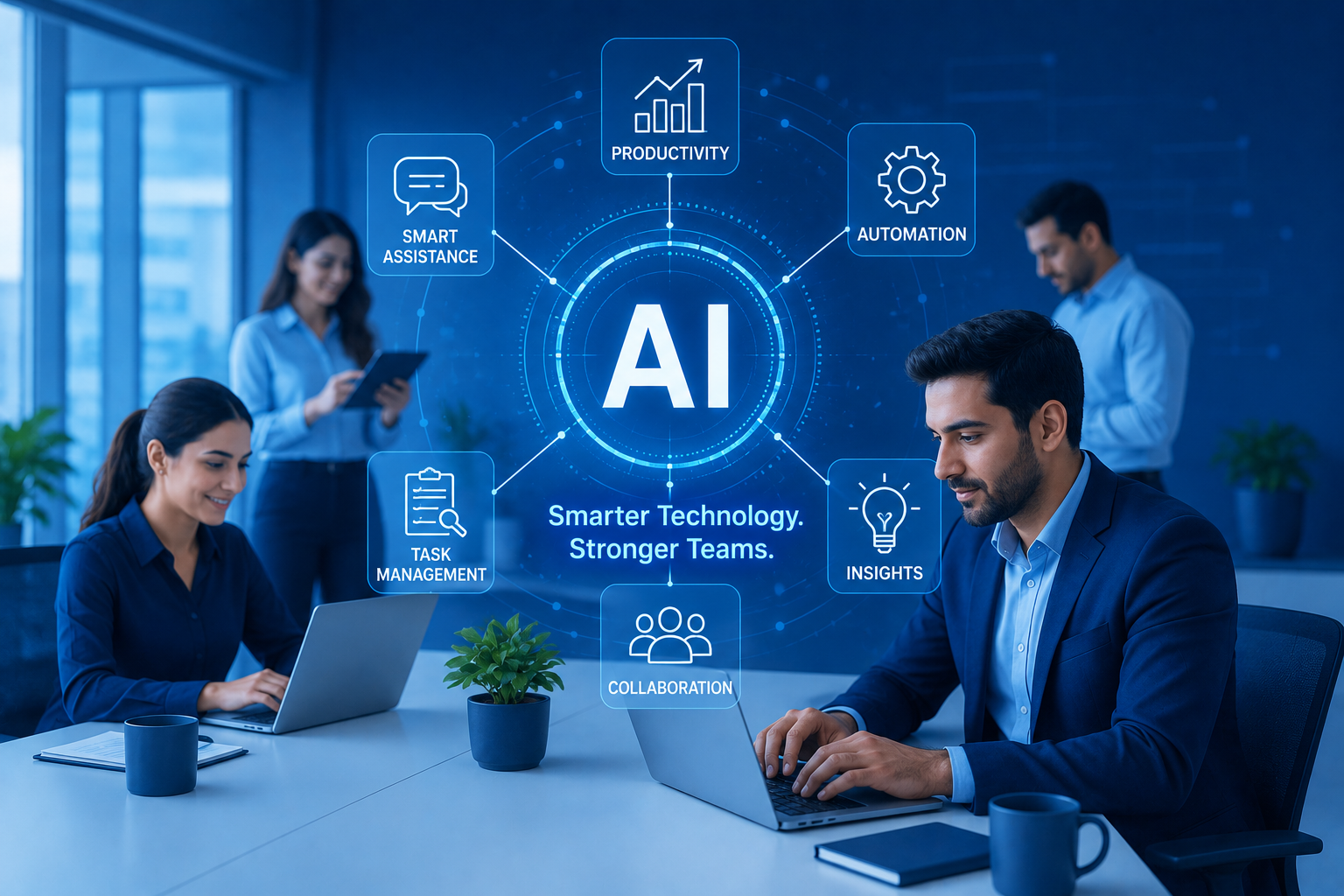
PeopleArtificial Intelligence (AI) is no longer a futuristic concept discussed only by technology experts. It has become a part of everyday life and is rapidly changing the way people work across industries. From answering customer questions and generating reports to analyzing data and automating repetitive tasks, AI is helping organizations become more efficient and productive.
Over the past few years, AI has moved from being an experimental technology to becoming a practical business tool. Organizations of all sizes are exploring how AI can improve operations, support employees, and create better experiences for customers. At the same time, many employees remain concerned about how AI might affect their careers and job security.
One of the biggest misconceptions about AI is that it exists primarily to replace people. While automation is certainly changing some aspects of work, the reality is much more positive. In most workplaces, AI is not replacing employees; it is helping them work smarter. The goal is not to eliminate human involvement but to reduce repetitive tasks and allow employees to focus on work that requires creativity, critical thinking, communication, and decision-making.
As organizations continue adopting AI technologies, understanding their true impact becomes increasingly important. AI is transforming workplaces, but it is doing so by enhancing human capabilities rather than replacing them.
Understanding AI in the Modern Workplace
Artificial Intelligence refers to systems and technologies that can perform tasks typically requiring human intelligence. These tasks include analyzing information, recognizing patterns, generating content, making recommendations, and learning from data.
Today, AI is integrated into many workplace tools that employees use every day. Whether someone realizes it or not, they may already be interacting with AI through email assistants, search engines, customer service platforms, productivity software, or collaboration tools.
The widespread availability of AI has made it easier for organizations to improve efficiency without making major operational changes. Instead of requiring completely new workflows, many AI solutions integrate directly into existing processes, helping employees complete tasks more quickly and accurately.
This accessibility is one of the reasons AI adoption is growing so rapidly across industries.
Why Organizations Are Embracing AI
Modern workplaces generate enormous amounts of information every day. Employees manage emails, reports, documents, presentations, customer requests, project updates, financial records, and countless other forms of data.
Processing this information manually requires significant time and effort.
Organizations are increasingly adopting AI because it helps address several common challenges:
- Information overload
- Repetitive administrative tasks
- Slow decision-making
- Operational inefficiencies
AI allows employees to manage information more effectively while reducing the amount of time spent on routine activities.
For example, tasks that previously required hours of manual effort can now be completed in minutes. Reports can be generated automatically, data can be analyzed instantly, and information can be organized more efficiently.
These improvements create opportunities for employees to focus on higher-value work rather than repetitive administrative responsibilities.
The Biggest Misunderstanding About AI
Whenever a new technology emerges, concerns about job displacement often follow.
The same happened during the rise of computers, the internet, and digital communication tools. Many people feared these technologies would eliminate jobs. Instead, they transformed how work was performed and created entirely new opportunities.
AI is following a similar pattern.
While certain repetitive tasks can be automated, most jobs involve much more than routine work. Employees contribute skills that technology cannot easily replicate, including:
- Creativity
- Emotional intelligence
- Leadership
- Relationship building
- Strategic thinking
- Ethical decision-making
AI can support these activities, but it cannot fully replace them.
Organizations are discovering that the most effective approach is combining AI capabilities with human expertise. This partnership often produces better results than either could achieve independently.
How AI Is Improving Everyday Productivity
One of the most immediate benefits of AI is improved productivity.
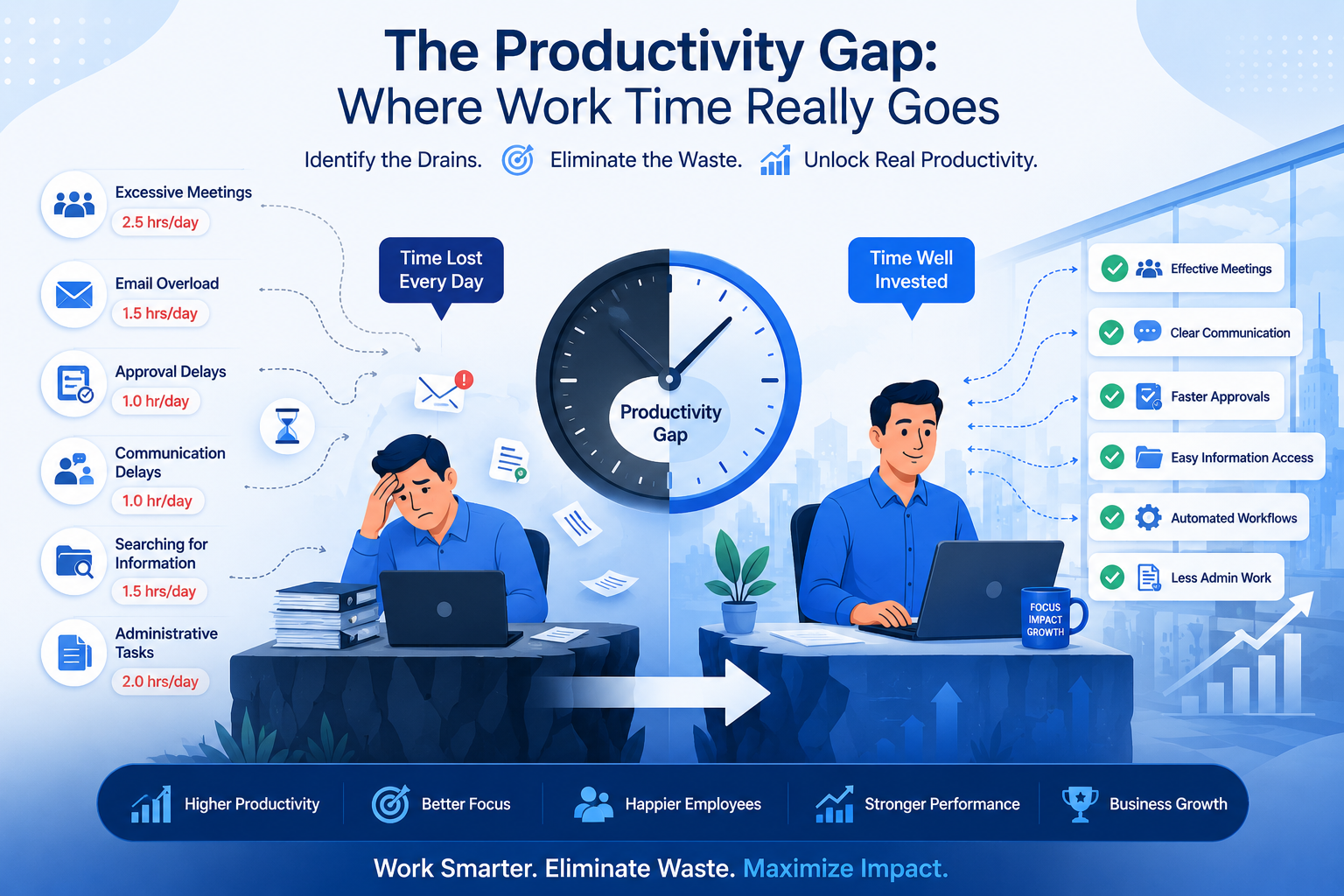
Many employees spend a large portion of their day performing routine activities such as:
- Organizing information
- Scheduling meetings
- Preparing reports
- Managing emails
- Updating records
While necessary, these tasks often consume valuable time that could be spent on more meaningful work.
AI helps automate these repetitive activities, allowing employees to focus on projects that require problem-solving, innovation, and collaboration.
For example, AI-powered tools can summarize lengthy documents, generate meeting notes, prioritize tasks, and provide recommendations based on available information.
Instead of spending hours reviewing data, employees can quickly access key insights and take action.
This shift helps improve workplace efficiency without increasing workload.
AI and Better Decision-Making
Decision-making has become increasingly complex in today's data-driven world.
Organizations collect vast amounts of information from customers, employees, operations, and market activities. While access to data is valuable, making sense of that data can be challenging.
AI helps organizations transform raw information into actionable insights.
By analyzing patterns and identifying trends, AI can support decision-makers in areas such as:
- Resource planning
- Performance management
- Risk assessment
- Customer behavior analysis
- Strategic forecasting
Leaders can use these insights to make faster and more informed decisions.
Rather than relying solely on assumptions or limited information, organizations can leverage AI to improve accuracy and confidence in their planning processes.
Transforming Customer Experiences
Customer expectations continue to evolve.
People expect fast responses, personalized interactions, and seamless experiences across digital channels.
AI is helping organizations meet these expectations by improving customer service and support.
Many businesses now use AI-powered tools to:
Answer common questions
Provide instant assistance
Route customer inquiries
Recommend products or services
These technologies help reduce response times while allowing customer service teams to focus on more complex situations.
Importantly, AI does not eliminate the need for human support.
Customers often prefer interacting with real people when dealing with sensitive, complicated, or emotional situations. AI handles routine inquiries, while employees provide empathy, understanding, and personalized solutions.
This combination creates a stronger customer experience.
AI Is Enhancing Creativity
Many people associate AI primarily with automation and data analysis. However, AI is also becoming a valuable creative partner.
Writers, marketers, designers, and content creators are increasingly using AI to support their work.
AI can help generate ideas, organize information, draft content, and streamline creative processes.
This does not mean AI replaces creativity.
Instead, it reduces the time spent on repetitive aspects of content creation, allowing professionals to focus on strategy, storytelling, and innovation.
The creative process still requires human insight and originality.
AI simply helps accelerate certain tasks and overcome creative blocks.
Human Skills Remain Essential
Despite its capabilities, AI has limitations.
There are many areas where human skills remain irreplaceable.
For example:
Emotional Intelligence
Understanding emotions, building trust, and managing relationships require human empathy.
Leadership
Effective leaders inspire teams, navigate challenges, and make difficult decisions.
Critical Thinking
Complex problems often require judgment, context, and experience that AI cannot fully replicate.
Creativity
Original ideas and innovative thinking remain uniquely human strengths.
Ethics and Responsibility
Organizations need people to ensure decisions align with ethical and organizational values.
As AI becomes more common, these human skills will become even more valuable.
The Importance of Continuous Learning
The workplace is constantly evolving.
Employees who embrace learning and adapt to new technologies are often better prepared for future opportunities.
Rather than viewing AI as a threat, professionals can benefit from understanding how to use AI effectively.
Key areas for skill development include:
- Communication
- Problem-solving
- Digital literacy
- Leadership
- Collaboration
- Strategic thinking
Learning how to work alongside AI can increase productivity and create new career opportunities.
Organizations are increasingly seeking employees who can combine technical understanding with strong interpersonal skills.
Challenges Organizations Must Address
Although AI offers significant benefits, successful implementation requires careful planning.
Organizations must consider several important factors.
Employee Training
Employees need support and education to use AI tools effectively.
Data Security
Sensitive information must be protected when using AI-powered systems.
Transparency
Organizations should clearly communicate how AI is being used and its role in workplace processes.
Ethical Considerations
AI systems should be used responsibly and fairly.
Addressing these challenges helps build trust and ensures AI adoption delivers positive outcomes.
The Future of Work
The future workplace will likely involve even closer collaboration between people and technology.
AI will continue supporting activities such as:
- Information management
- Workflow automation
- Data analysis
- Customer support
- Content generation
At the same time, employees will continue providing the creativity, leadership, and human connection that organizations need.
The most successful workplaces will not be those that rely entirely on technology.
They will be the ones that effectively combine AI capabilities with human expertise.
Organizations that strike this balance will be better positioned for innovation, growth, and long-term success.
Why AI Should Be Viewed as an Opportunity
Every major technological advancement has created uncertainty.
However, history shows that innovation often creates more opportunities than it removes.
AI has the potential to:
- Improve workplace efficiency
- Reduce repetitive work
- Support employee productivity
- Enhance customer experiences
- Drive innovation
Rather than replacing people, AI is helping employees focus on the aspects of work that matter most.
By removing routine tasks and improving access to information, AI enables individuals to contribute at a higher level.
This shift can create more meaningful and rewarding work experiences.
Frequently Asked Questions
What is AI in the workplace?
AI in the workplace refers to technology that helps automate tasks, analyze information, and improve productivity.
Will AI replace human workers?
Most organizations use AI to support employees rather than replace them entirely.
How does AI improve productivity?
AI automates repetitive tasks, organizes information, and provides useful insights.
What industries are using AI?
Healthcare, finance, education, retail, manufacturing, and technology sectors all use AI in different ways.
Why is AI important in modern workplaces?
AI helps organizations improve efficiency, make better decisions, and support employees.
What skills will remain important in an AI-driven future?
Communication, creativity, leadership, critical thinking, emotional intelligence, and adaptability will remain highly valuable.
Conclusion
Artificial Intelligence is transforming the modern workplace in remarkable ways. It is helping organizations become more efficient, supporting employees in their daily tasks, and creating opportunities for innovation and growth.
While concerns about automation are understandable, the reality is that AI works best when combined with human talent. Technology can process information quickly and automate repetitive activities, but people provide creativity, judgment, empathy, and leadership.
The future of work is not about humans competing with AI. It is about humans and AI working together to achieve better outcomes than either could accomplish alone.
Organizations that embrace this partnership will be better prepared for the challenges and opportunities of the digital age.