Table of Contents
- What Is a Smart Workplace?
- Why Productivity Matters in Modern Workplaces
- Common Workplace Productivity Challenges
- Too Many Manual Tasks
- Communication Confusion
- Poor Workflow Visibility
- Workplace Stress
- How Smart Workplaces Improve Productivity
- Better Communication
- Organized Workflow Management
- Flexible Work Environments
- Faster Access to Information
- Importance of Employee Experience
- Role of Technology in Smart Workplaces
- Benefits of Smart Workplaces
- Increased Productivity
- Better Collaboration
- Reduced Operational Delays
- Improved Employee Satisfaction
- Better Work-Life Balance
- Features of Modern Smart Workplaces
- Future of Smart Workplaces
- Frequently Asked Questions (FAQs)
- What is a smart workplace?
- How do smart workplaces improve productivity?
- Why is communication important in workplaces?
- How does workflow management help teams?
- What role does technology play in smart workplaces?
- Why is employee experience important?
- Conclusion
- Explore Smart Workplace Solutions
Modern workplaces are changing rapidly. Teams today need faster communication, better collaboration, organized workflows, and flexible work environments to stay productive.
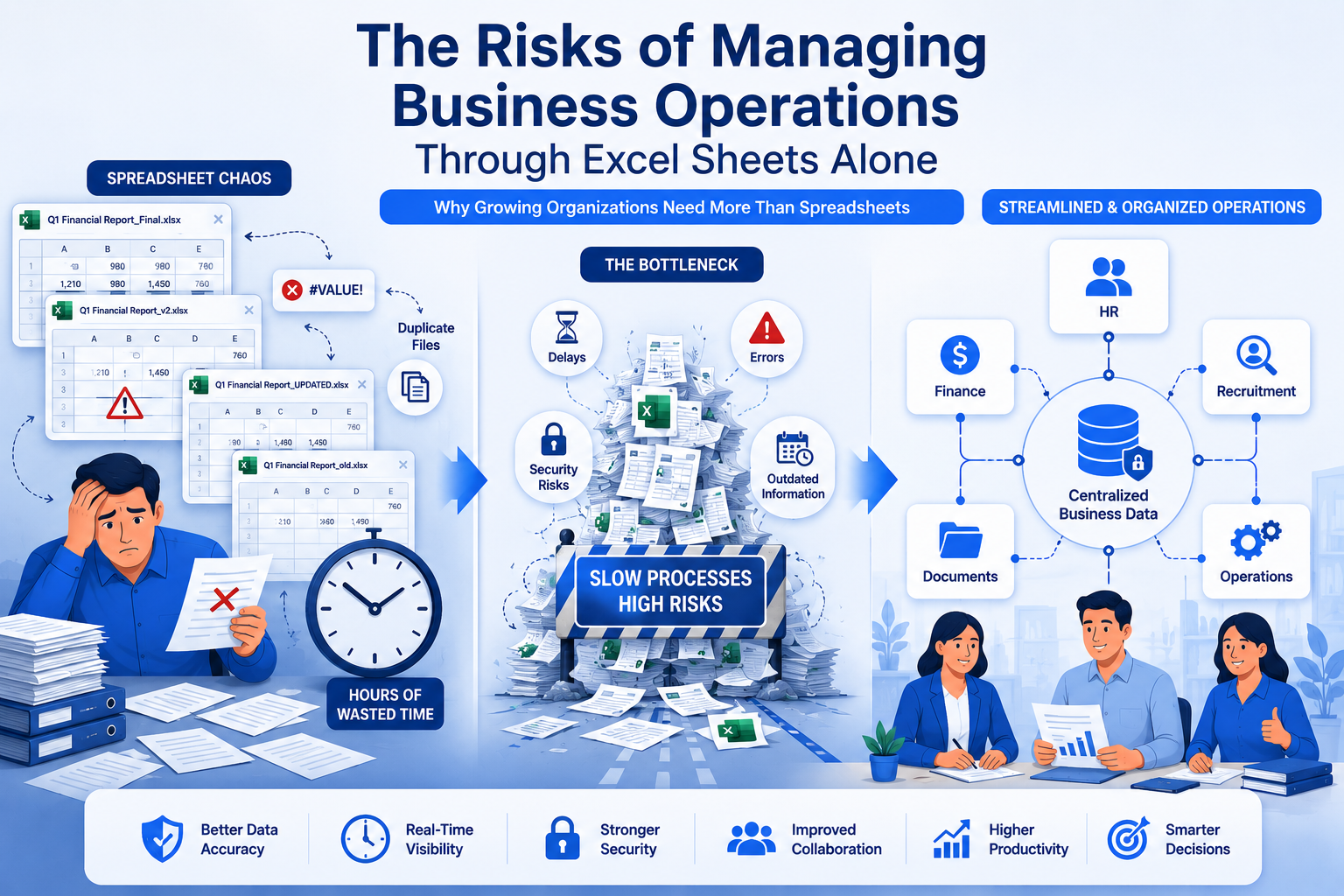
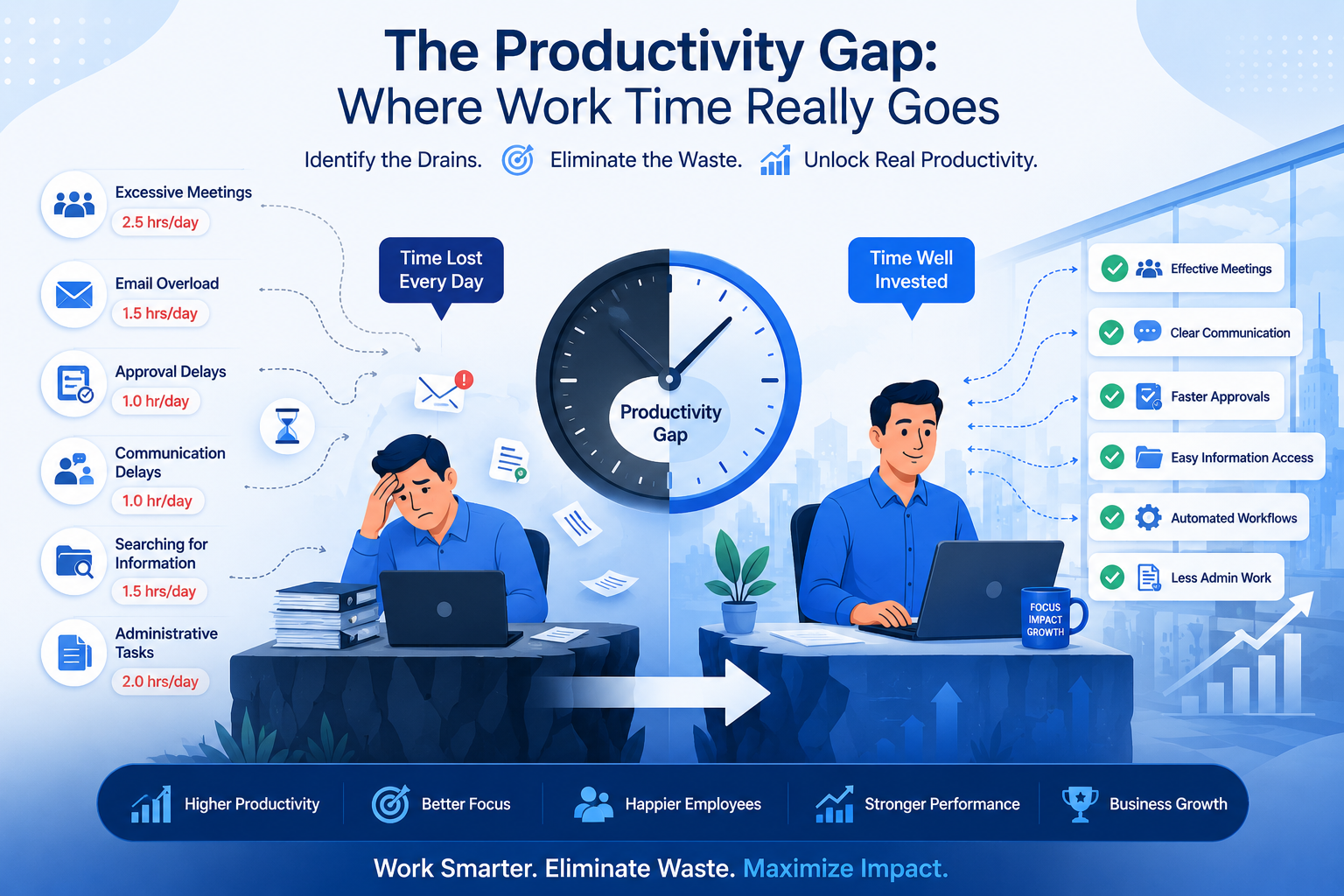
Traditional office systems often create delays, confusion, and unnecessary workload. Employees spend too much time managing repetitive tasks, searching for information, attending unnecessary meetings, and handling manual processes.
This is why smart workplace systems are becoming more important than ever.
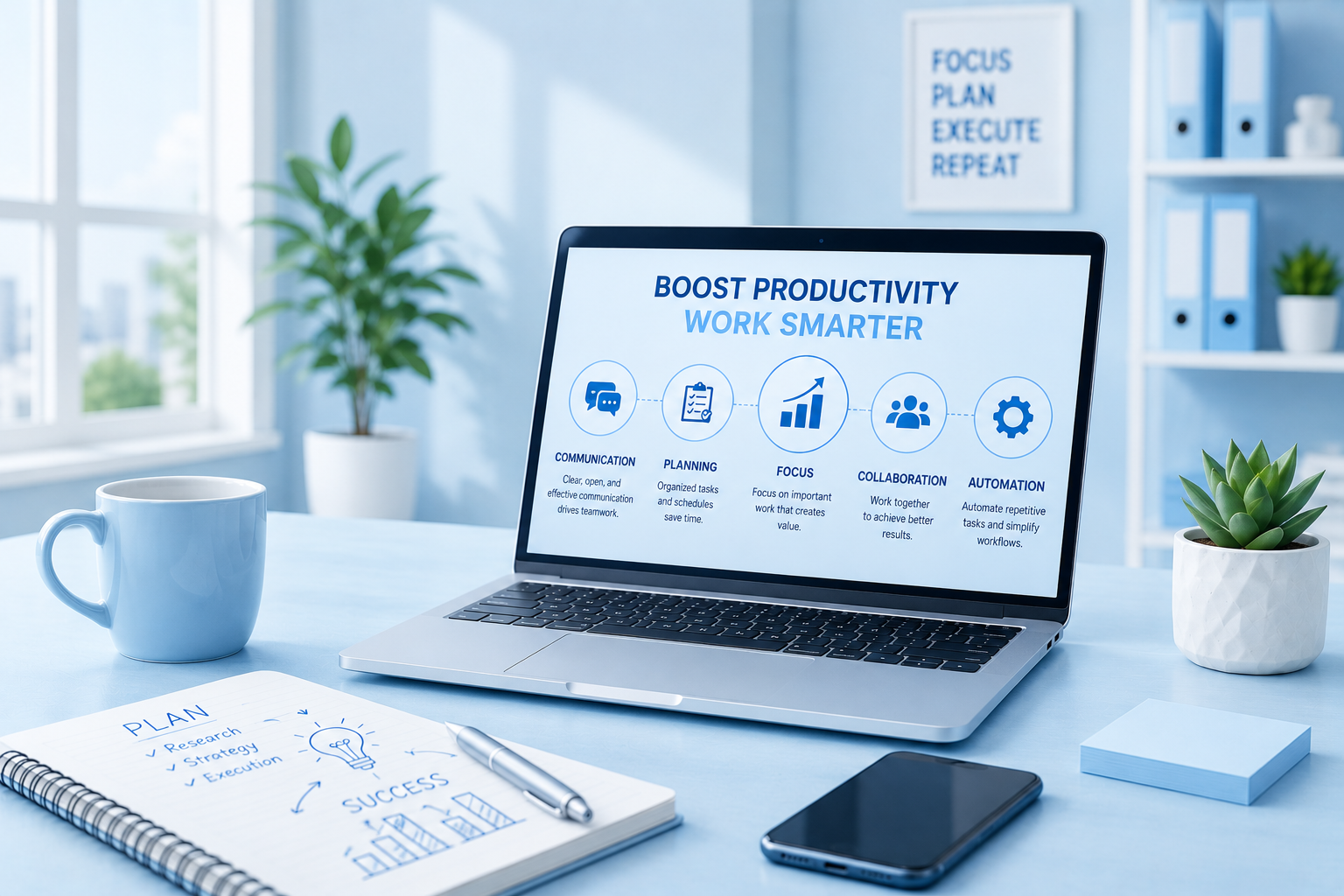
Smart workplaces use technology, automation, and better workflow management to create more productive, efficient, and employee-friendly environments.
What Is a Smart Workplace?
A smart workplace is a modern work environment that uses digital tools and organized systems to improve:
- Productivity
- Communication
- Collaboration
- Workflow management
- Employee experience
The goal is to help teams work more efficiently without creating unnecessary stress or operational confusion.
Why Productivity Matters in Modern Workplaces
Productivity is not only about working faster. It is also about:
- Better time management
- Clear communication
- Organized workflows
- Reduced operational delays
- Improved employee focus
Teams perform better when workplaces are properly organized and supported with the right systems.
Common Workplace Productivity Challenges
Too Many Manual Tasks
Employees often spend hours:
- Updating spreadsheets
- Searching files
- Managing paperwork
- Sending repetitive updates
This reduces valuable working time.
Communication Confusion
Using multiple apps and disconnected communication channels creates:
- Missed updates
- Delayed responses
- Team confusion
Clear communication improves workflow efficiency.
Poor Workflow Visibility
Without proper systems, it becomes difficult to track:
- Task progress
- Deadlines
- Team coordination
- Work priorities
This often creates delays and operational bottlenecks.
Workplace Stress
Disorganized environments increase employee stress and reduce motivation.
Employees work better in structured and supportive workplaces.
How Smart Workplaces Improve Productivity
Better Communication
Modern communication systems help teams:
- Share updates quickly
- Collaborate efficiently
- Reduce delays
- Stay connected
Fast communication improves coordination and teamwork.
Organized Workflow Management
Workflow systems help teams:
- Track tasks
- Monitor deadlines
- Improve accountability
- Reduce confusion
Employees can focus more on completing work instead of managing chaos.
Flexible Work Environments
Modern workplaces support:
- Remote work
- Hybrid work
- Flexible schedules
- Digital collaboration
Flexibility improves employee satisfaction and productivity.
Faster Access to Information
Digital systems help employees access:
- Documents
- Reports
- Project updates
- Team information
quickly and efficiently.
This saves time and improves workflow speed.
Importance of Employee Experience
Employee experience directly affects productivity.
Teams perform better when workplaces support:
- Collaboration
- Flexibility
- Communication
- Learning
- Work-life balance
Positive work environments improve motivation and employee engagement.
Role of Technology in Smart Workplaces
Modern workplace technology helps improve:
- Workflow automation
- Team coordination
- Reporting
- Task management
- Collaboration
Technology simplifies operations and reduces repetitive manual work.
Benefits of Smart Workplaces
Increased Productivity
Employees complete tasks faster in organized environments.
Better Collaboration
Teams communicate and work together more efficiently
Reduced Operational Delays
Structured workflows reduce confusion and unnecessary waiting time.
Improved Employee Satisfaction
Supportive workplaces improve motivation and workplace experience.
Better Work-Life Balance
Flexible systems help employees manage work more effectively.
Features of Modern Smart Workplaces
Modern workplaces often include:
- Digital workflow systems
- Online collaboration tools
- Automated task management
- Secure communication platforms
- Real-time reporting
- Flexible work support
These features help create more efficient operations.
Future of Smart Workplaces
The future workplace will focus more on:
- Automation
- Flexible work models
- AI-powered productivity tools
- Smart collaboration systems
- Employee-centered environments
Modern teams want workplaces that are efficient, flexible, and digitally connected
Frequently Asked Questions (FAQs)
What is a smart workplace?
A smart workplace uses technology and organized systems to improve productivity, communication, and workflow management.
How do smart workplaces improve productivity?
They reduce manual work, improve communication, simplify workflows, and support better collaboration.
Why is communication important in workplaces?
Good communication improves teamwork, reduces delays, and keeps operations organized.
How does workflow management help teams?
Workflow systems help teams track tasks, deadlines, and progress more efficiently.
What role does technology play in smart workplaces?
Technology supports automation, communication, collaboration, and workflow organization.
Why is employee experience important?
Positive workplace experiences improve motivation, productivity, and employee satisfaction.
Conclusion
Smart workplaces are helping modern teams work faster, communicate better, and stay more organized.
Instead of relying on outdated manual systems, modern workplaces focus on flexibility, collaboration, workflow management, and employee experience.
Teams perform best when workplaces are structured, supportive, and digitally connected.
The future of productivity is not about working harder — it is about working smarter.
Explore Smart Workplace Solutions
Looking for smarter ways to improve workplace productivity and collaboration?
Explore modern digital solutions for workflow management, communication, and workplace efficiency.
Explore More: https://i-spur.com/link-bridge