Table of Contents
- Stand-Up Comedians and Podcasters Can Build a Stronger Online Presence With One Smart Link
- The Online Journey of a Modern Comedian or Podcaster
- A Link in Bio Can Become More Than a List of Links
- Why a Stand-Up Comedian Needs a Different Digital Identity
- Podcasting Creates a Similar Challenge
- Choosing a Template That Matches the Creator's Personality
- One Link Can Connect the Audience With the Creator's Whole Content World
- Building a Professional Image Without Losing Personality
- Keeping the Most Important Content at the Front
- Why Mobile-Friendly Profiles Matter for Creators
- Using One Digital Profile Across Multiple Channels
- Making the Profile Useful for Audience Growth
- LinkBridge for Stand-Up Comedians and Podcasters
- Conclusion
Stand-Up Comedians and Podcasters Can Build a Stronger Online Presence With One Smart Link
For a stand-up comedian or podcaster, having a strong online presence is no longer limited to uploading videos or sharing posts on social media. Audiences may discover a comedian through a short comedy clip, find a podcast through a recommendation, watch an interview on YouTube, follow an Instagram account, or hear about a live show from a friend. The problem begins when all of these activities are spread across different platforms and there is no simple place where people can find everything together.
A person may want to watch the latest episode, follow the creator, check upcoming shows, listen to older episodes, contact the comedian, explore collaborations, or simply learn more about the person behind the content. If every destination requires a separate search, even an interested visitor can lose interest. This is where a well-organized link in bio for comedians and podcasters can become useful. i-Spur Link Bridge allows creators to bring important social profiles, websites, contact information, portfolios and other destinations together on one shareable page, making one link a practical digital home for a creator's online presence.
The template selection shown in the provided screenshot is particularly suited to this idea because it includes a dedicated “Podcasters/stand of comedy” category under the Creators section. Instead of treating every creator in exactly the same way, the template collection gives this category its own visual direction, with designs such as Laugh Track Live, The Creative Chair, Studio 9 Podcast, and After Hours Podcast visible in the selection. This matters because comedy and podcasting are highly personality-driven forms of content. A comedian's online profile should feel different from a corporate business page, while a podcast profile may need a different atmosphere from a photographer's portfolio. The right starting template can help a creator build a digital profile that feels connected to the type of content they actually produce.
The Online Journey of a Modern Comedian or Podcaster
A comedian or podcaster can have many different digital destinations at the same time. Instagram may be used for short clips and announcements, YouTube may contain full performances or podcast episodes, Spotify or other listening platforms may host audio content, and a personal website may contain additional information. There may also be WhatsApp contact, event information, booking details, merchandise, collaboration opportunities, or links to other social channels. None of these destinations is necessarily a problem on its own. The difficulty is making them easy for an audience to discover.
Think about someone who watches a comedian's fifteen-second video and decides they want to see more. They may visit the comedian's profile and find one website link. If that link takes them somewhere unrelated to the content they were looking for, they may leave. A single creator profile can make that journey much easier by putting the important destinations together in one place. The visitor can arrive through one link and decide what they want to explore next.
This is especially valuable for comedians and podcasters because their audiences often move between different types of content. Someone may discover a comedian through a short clip but become a regular viewer of longer performances. Someone may hear one podcast episode and then want to listen to the complete series. A centralized profile creates a connection between those different pieces of content.
A Link in Bio Can Become More Than a List of Links
A common mistake is to think of a link-in-bio page as nothing more than a collection of buttons. For creators, it can work as a simple introduction. Before someone watches another video or listens to an episode, the profile can tell them what the creator does and where their most important content can be found.
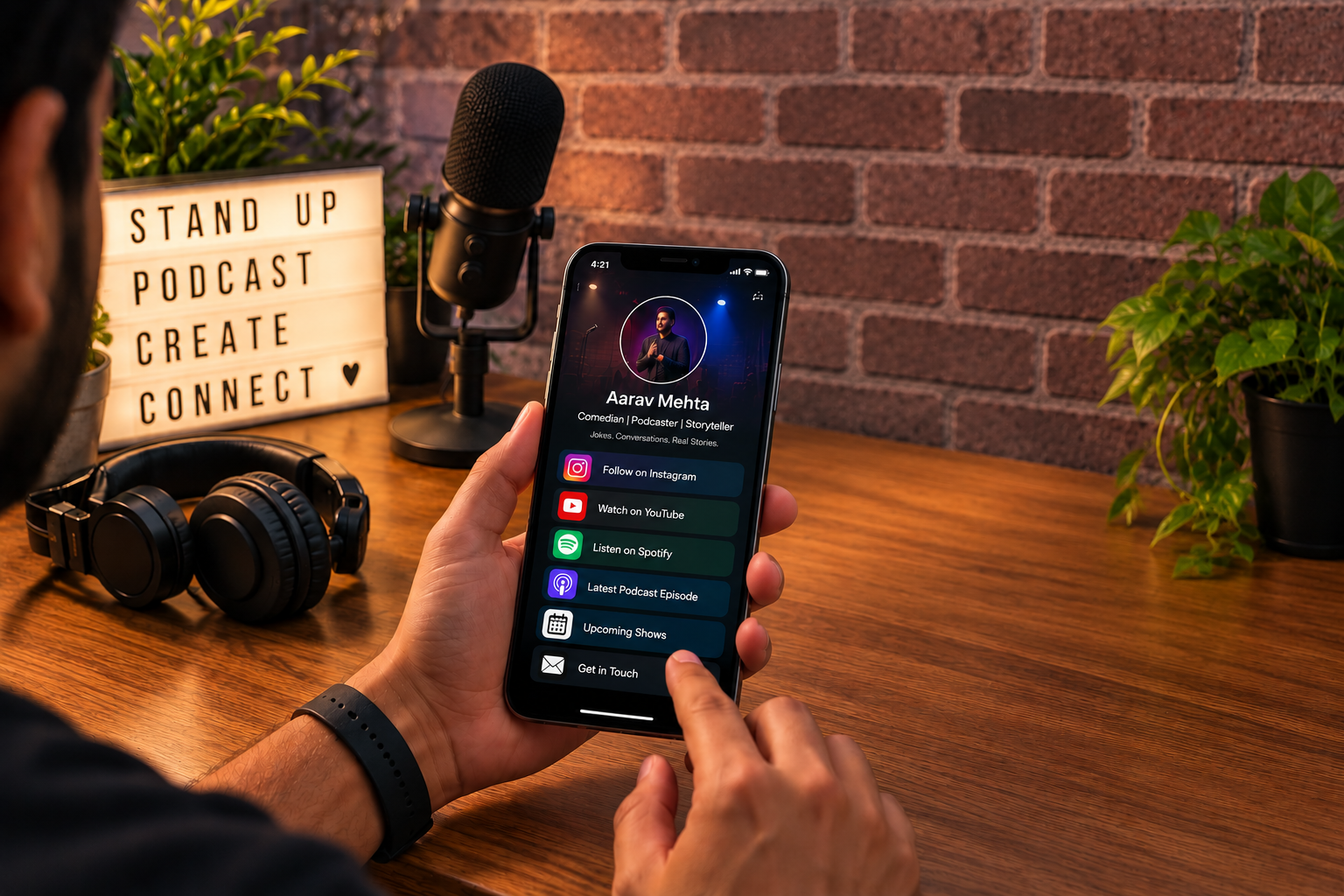
For a stand-up comedian, the profile could guide visitors toward comedy clips, live-show information, social media, booking or contact information, and other creator destinations. For a podcaster, it could highlight the latest episode, podcast platform links, YouTube content, social profiles, guest-related content, and contact information.
The objective is not to place every possible link on the page simply because there is space. The objective is to organize the most useful destinations so that visitors can understand the creator quickly and decide what they want to do next.
A well-planned creator profile might include:
- Latest comedy performance or podcast episode
- YouTube channel
- Instagram profile
- Podcast listening platforms
- Upcoming show or event information
- Business and collaboration contact
- Personal website
- Merchandise or other creator-related links
- WhatsApp or direct contact option
- Other important social platforms
The exact structure can change as the creator's priorities change, which makes a centralized profile useful over the long term.
Why a Stand-Up Comedian Needs a Different Digital Identity
Stand-up comedy depends heavily on personality, timing, storytelling, audience connection, and individual style. A comedian's digital presence should therefore feel personal rather than looking like a generic corporate website. The stand-up comedy template concept shown in the screenshot recognizes this difference by giving comedy-oriented creators a dedicated category.
A comedian may be working across several areas at once. They may perform at live events, create social media clips, publish longer videos, appear on podcasts, collaborate with other creators, and communicate with event organizers. Their online profile becomes a central point where these different parts of their career can meet.
For example, imagine a visitor discovering a comedian through an Instagram reel. After watching the clip, the visitor may want to see the comedian's latest full performance. Another visitor may be interested in booking the comedian for an event. Someone else may simply want to follow their social accounts. Instead of creating different links for each audience, one digital profile can provide all of these choices.
That makes the profile useful for both audience growth and professional opportunities.
Podcasting Creates a Similar Challenge
Podcasters face a slightly different version of the same problem. A podcast may exist across several listening and video platforms, and audiences may prefer different ways of consuming the same content. One person may watch the video version, another may listen to the audio version, and another may discover individual clips on social media.
If the podcast has no central destination, the audience has to search for the show manually. A creator profile can reduce that effort by bringing important destinations together.
A podcast-focused profile can highlight:
- The newest podcast episode
- Full podcast video
- Audio listening platforms
- Short clips
- Guest interviews
- Instagram and other social channels
- Podcast website
- Collaboration information
- Contact details
- Upcoming recordings or live events
This structure can be particularly useful when a podcast grows beyond a single platform. The creator does not have to choose between YouTube, social media, audio platforms, or a website. The profile can connect them.
Choosing a Template That Matches the Creator's Personality
The template screenshot shows several different visual directions within the Podcasters/stand of comedy category. This is important because there is no single visual identity that works for every comedian or podcast.
A comedy creator may prefer a more energetic presentation that reflects live performances and entertainment. A podcast focused on conversations may prefer something more studio-oriented and relaxed. A creator producing interviews may want the profile to feel professional without becoming overly corporate.
The templates shown include different visual ideas, from a comedy-stage atmosphere to podcast studio environments. This gives creators a starting point that can be closer to their content rather than forcing them to begin with an unrelated design.
The goal should be to choose a template that supports the creator's identity rather than allowing the template to become the identity itself. The creator's name, profile information, content and important links should remain the main focus.
One Link Can Connect the Audience With the Creator's Whole Content World
The biggest advantage of a centralized profile is connection. A comedian may have hundreds of short clips but only one main YouTube channel. A podcaster may have dozens of episodes spread across different platforms. A visitor should not have to understand this entire structure before they can find the content they want.One link can act as the starting point.
Imagine a listener discovering a podcast through a social media clip. They click the creator's profile and immediately see the latest episode, podcast links, YouTube channel, Instagram profile and contact information. They can choose the destination that matches how they prefer to consume content.
The same idea works for stand-up comedy. A person who discovers a comedian through a short video can move from the clip to longer performances, social profiles, show information or contact details without having to search manually.This creates a smoother journey from discovery to engagement.
Building a Professional Image Without Losing Personality
Professionalism does not mean making a comedian or podcaster look formal. For creators, professionalism often means making information easy to understand and keeping important destinations organized.
A creator can still have a fun, bold, energetic or conversational personality while maintaining a clean digital profile. In fact, a well-organized profile can give visitors a better understanding of the creator because there is less confusion about where to go.
For professional opportunities, this can become even more important. Event organizers, brands, podcast guests and potential collaborators may discover a creator through social media. When they need additional information, a single digital profile can provide a convenient starting point.
Instead of sending several separate messages containing different URLs, a creator can share one profile.
That profile can direct professional visitors toward:
- Collaboration information
- Business contact details
- Social media profiles
- Previous content
- YouTube or podcast channels
- Website or portfolio
- Event-related information
This creates a more organized path without requiring a complicated website.
Keeping the Most Important Content at the Front
A creator's priorities change constantly. A comedian may have a new tour coming up this month, while next month the focus may shift toward a new video series. A podcaster may launch a new season, release a special interview, or publish an important episode.
Because of this, a digital profile should not be treated as something that is created once and forgotten.
The most important destination should receive the strongest position. Older information can be moved down or removed when it is no longer useful. This makes the profile more relevant to returning visitors.
For example, a podcast creator launching a new season could prioritize the latest episode and listening options. A comedian promoting an upcoming show could make event information more visible. After the event, those links could be replaced with new content.
This simple approach keeps the profile connected to what the creator is doing now.
Why Mobile-Friendly Profiles Matter for Creators
Creators usually share their profiles through places where audiences are already using mobile devices. A person watching a reel, viewing a social profile, or receiving a creator's link through WhatsApp is likely to open the destination from a phone.
That means the profile needs to be easy to understand without unnecessary navigation. Link Bridge describes its pages as mobile-friendly and designed for creators, professionals and businesses. It also allows creators to bring social profiles, contact information and other destinations together through one URL.
For a comedian or podcaster, this can make a difference because the visitor may only have a few seconds of attention. The important options should be easy to identify.A useful mobile creator page should make it simple to:
- Recognize the creator
- Understand what they create
- Find the latest content
- Open social platforms
- Listen to or watch episodes
- Contact the creator
- Discover important announcements
The simpler the journey, the easier it becomes for the visitor to continue exploring.
Using One Digital Profile Across Multiple Channels
Another useful part of a creator profile is that the same link can be shared in different places. Link Bridge is designed around the idea of using one URL across destinations such as Instagram, WhatsApp, email signatures, business cards and other promotional channels.
For a comedian, the same profile link could appear in an Instagram bio, YouTube description, event promotion, digital poster or message to a potential event organizer. For a podcaster, it could be used across social profiles, podcast descriptions, guest communications and promotional campaigns.
This reduces the need to repeatedly explain where everything can be found.One link becomes the reference point.
Making the Profile Useful for Audience Growth
A creator profile cannot replace good content. The content still has to attract people, entertain them, educate them or make them want to return. What the profile can do is make the next step easier.
This is particularly important for creators because audience growth often happens across several platforms. Someone may follow a comedian on Instagram but watch full videos on YouTube. Someone may discover a podcast through a short clip but prefer listening through another platform.A central profile helps connect these different audience behaviors.
Instead of thinking, “How do I get everyone onto one platform?” a creator can think, “How do I make it easy for people to find the content they want?”
That is a much more practical approach to managing a modern creator presence.
LinkBridge for Stand-Up Comedians and Podcasters
The concept behind LinkBridge is simple: bring the important parts of a creator's online presence into one shareable digital profile. According to i-Spur, Link Bridge allows users to create branded digital profiles and link-in-bio pages, add social profiles, websites, contact information and other destinations, and share them through one URL.
For the Podcasters/stand of comedy category shown in the provided screenshot, this idea can be especially useful because comedians and podcasters often have a wide range of content and communication channels. Instead of presenting visitors with scattered destinations, the creator can organize them around a central profile.
The template becomes the visual starting point, while the creator's content gives the profile its actual personality.
Conclusion
Stand-up comedians and podcasters are no longer building their audiences in one place. Their content can move between Instagram, YouTube, podcast platforms, websites, live events and direct communication channels. As the number of platforms increases, having a simple way to connect everything becomes more important. A well-designed link in bio for comedians and podcasters can provide that connection by giving audiences one place to discover the creator's content, social profiles, contact information and other important destinations.
The dedicated Podcasters/stand of comedy template category shown in the Link Bridge interface makes this approach more relevant because it recognizes that entertainment creators have a different visual and communication style. Designs such as Laugh Track Live, Studio 9 Podcast, and After Hours Podcast demonstrate different directions for presenting a comedy or podcast identity. The right choice can help establish the atmosphere before a visitor even starts exploring the links.
Ultimately, the purpose of a creator profile is not to replace social media, YouTube, podcast platforms or a personal website. It is to connect them. One link can become the doorway to the creator's wider digital world, giving followers a clearer path to their content while giving collaborators, event organizers and potential business contacts an easier way to understand and reach them. For a comedian or podcaster building a recognizable online presence, that simple connection can turn a collection of separate profiles into one more organized and professional digital identity.