Table of Contents
- Why Workplace Technology Matters
- 1. Business Process Automation
- 2. AI-Powered Productivity Tools
- 3. Hybrid & Remote Work Technology
- 4. Secure Business Communication
- 5. Cloud & Hybrid Infrastructure
- 6. Smart Workflow Management
- 7. Real-Time Analytics & Business Intelligence
- 8. Digital Employee Experience
- 9. Contactless & Mobile-First Technology
- 10. Cybersecurity & Data Protection
- How Technology Improves Business Productivity
- Industries Benefiting from Workplace Technology
- IT Companies
- Retail Businesses
- Healthcare
- Manufacturing
- Corporate Businesses
- Future of Workplace Technology
- Frequently Asked Questions (FAQs)
- What is workplace technology?
- Why is workplace technology important?
- What are the biggest workplace technology trends in 2026?
- How does automation improve productivity?
- Why are businesses investing in digital systems?
- Is workplace technology useful for small businesses?
- Conclusion
- Explore Smart Digital Solutions
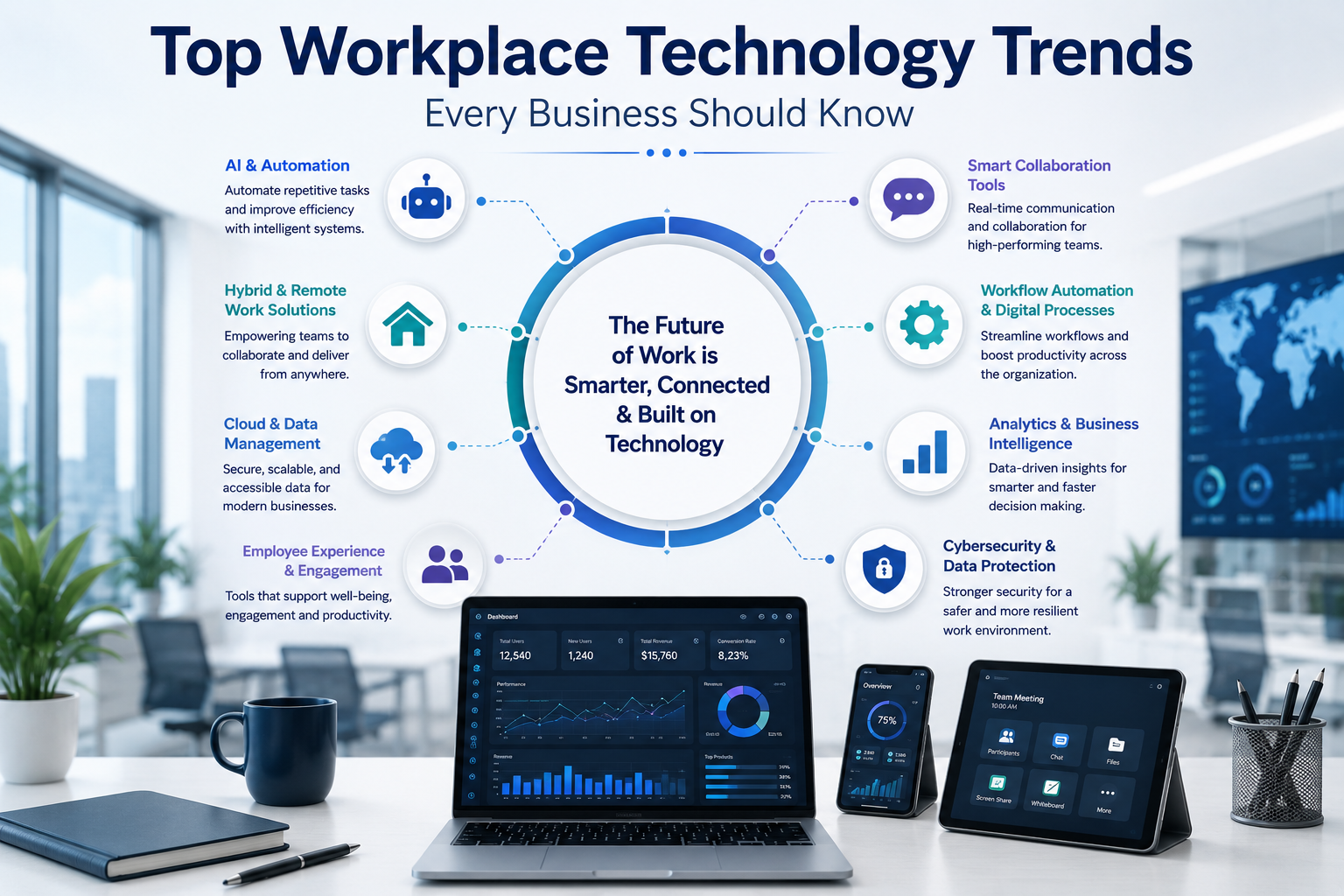
The modern workplace is changing rapidly. Businesses today are no longer relying only on traditional office systems and manual processes. Technology is transforming how companies manage employees, communicate, collaborate, and operate daily workflows.
From automation and AI-powered systems to secure communication and smart collaboration tools, workplace technology is becoming one of the biggest drivers of business growth and productivity.
Companies adopting modern workplace technologies are improving efficiency, reducing operational complexity, and creating better employee experiences.
In 2026, businesses that invest in smart digital solutions will be better prepared for future growth and changing market demands.
Why Workplace Technology Matters
Technology is no longer optional for modern businesses.
Organizations today need systems that help them:
- Improve productivity
- Simplify operations
- Support remote work
- Protect business data
- Improve collaboration
- Manage growing workloads
Modern workplace technology helps businesses stay competitive in an increasingly digital world.
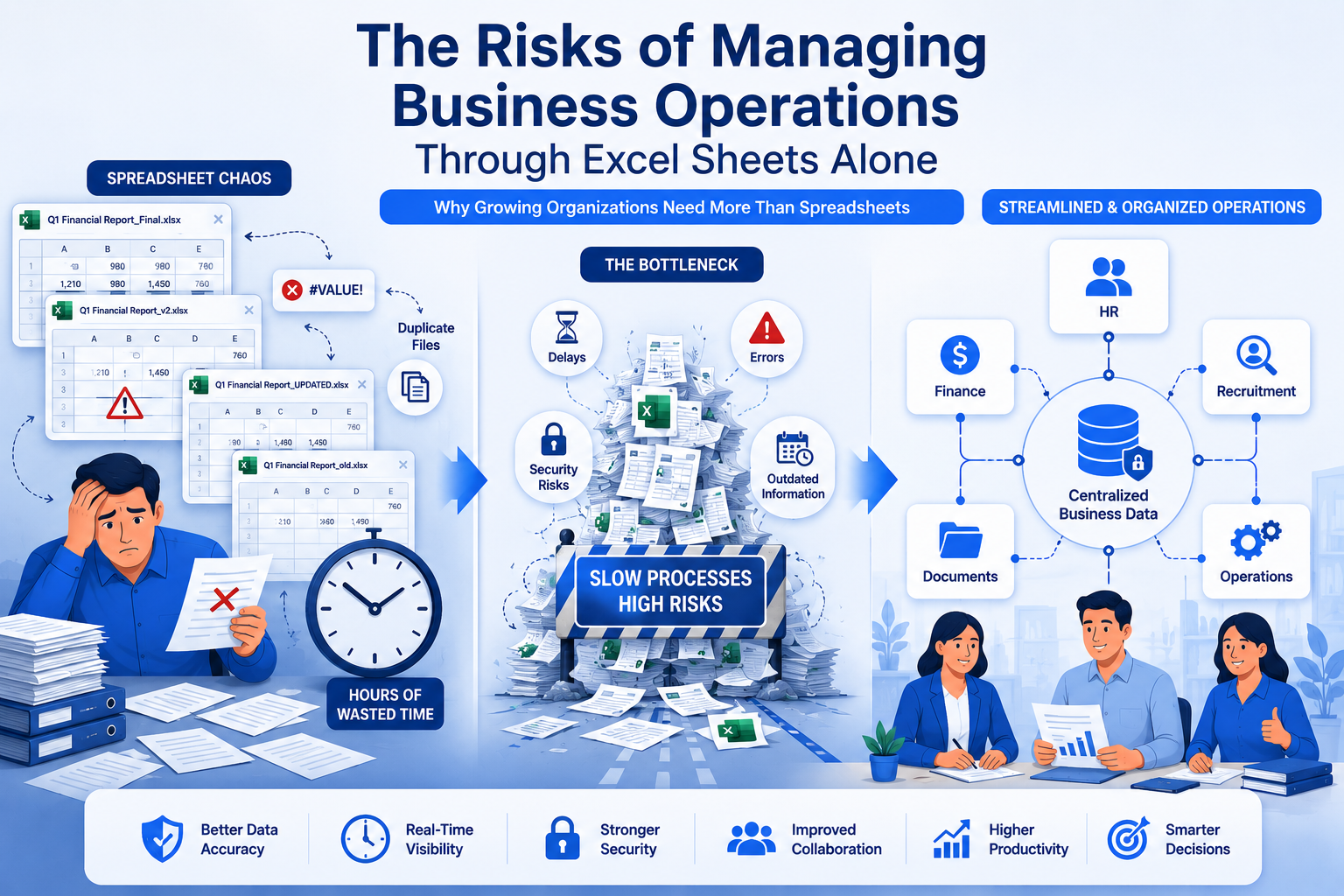
1. Business Process Automation
One of the biggest workplace trends is automation.
Businesses are automating repetitive tasks such as:
- Attendance tracking
- Payroll processing
- Invoice approvals
- Workflow management
- Reporting
Automation helps companies:
- Save time
- Reduce errors
- Improve efficiency
- Increase productivity
Businesses are moving away from manual operations toward smarter digital workflows.
2. AI-Powered Productivity Tools
Artificial Intelligence (AI) is becoming an important part of modern workplaces.
Businesses are using AI tools for:
- Smart reporting
- Workflow optimization
- Data analysis
- Customer support
- Employee productivity tracking
AI helps organizations make faster and more accurate decisions.
3. Hybrid & Remote Work Technology
Remote and hybrid work models continue growing in 2026.
Businesses are investing in technologies that support:
- Virtual collaboration
- Remote employee management
- Digital communication
- Cloud access
- Workflow coordination
Companies now require systems that allow teams to work efficiently from anywhere.
4. Secure Business Communication
Cybersecurity is becoming a major priority for businesses.
Companies are moving toward:
- Secure messaging systems
- Encrypted communication
- Access-controlled platforms
- Private communication environments
Secure communication helps organizations protect sensitive business information and improve operational safety.
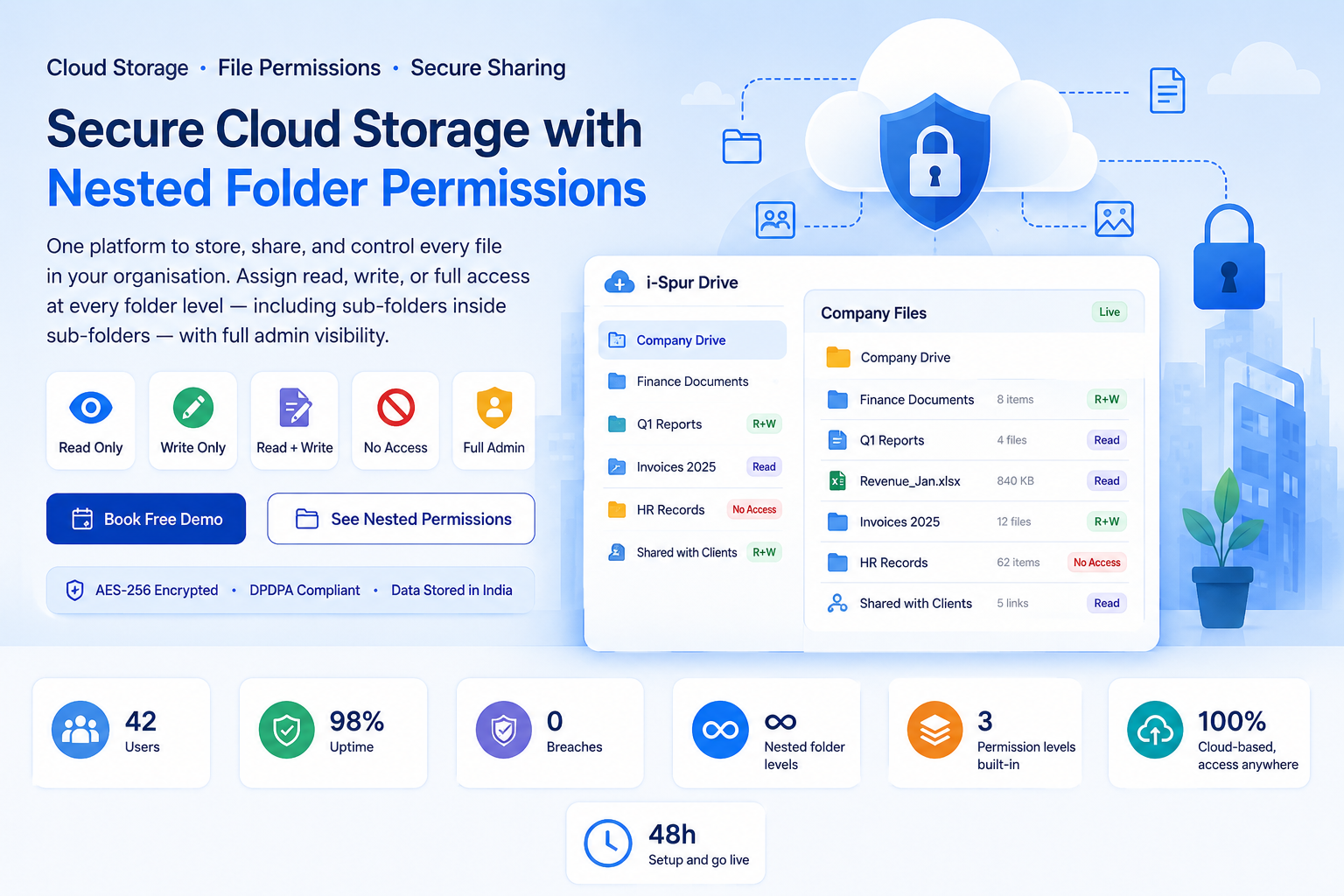
5. Cloud & Hybrid Infrastructure
Modern businesses are increasingly adopting:
- Cloud systems
- Hybrid infrastructure
- Digital storage
- Centralized data management
These systems help businesses improve:
- Accessibility
- Scalability
- Operational flexibility
- Data management
Cloud and hybrid infrastructure continue shaping the future of workplace technology.
6. Smart Workflow Management
Workflow management tools are helping businesses organize operations more efficiently.
Modern systems allow companies to:
- Track projects
- Assign tasks
- Monitor deadlines
- Improve accountability
- Reduce operational delays
Workflow visibility is becoming increasingly important for growing businesses.
7. Real-Time Analytics & Business Intelligence
Data-driven decision-making is one of the biggest business trends in 2026.
Businesses are using analytics platforms to monitor:
- Productivity
- Team performance
- Financial operations
- Customer engagement
- Workflow efficiency
Real-time analytics help companies make smarter business decisions faster.
8. Digital Employee Experience
Businesses are focusing more on employee experience and workplace satisfaction.
Modern workplace systems now support:
- Self-service portals
- Employee engagement tools
- Digital HR systems
- Flexible work management
- Simplified communication
Improving employee experience helps businesses increase productivity and retention.
9. Contactless & Mobile-First Technology
Businesses are increasingly adopting:
- QR technology
- Mobile access systems
- Digital onboarding
- Contactless interactions
Mobile-friendly operations help improve customer experiences and workplace efficiency.
10. Cybersecurity & Data Protection
As businesses become more digital, cybersecurity risks continue increasing.
Companies are investing in:
- Data encryption
- Secure access control
- Network protection
- Multi-factor authentication
- Business continuity systems
Strong security infrastructure is becoming essential for modern organizations.
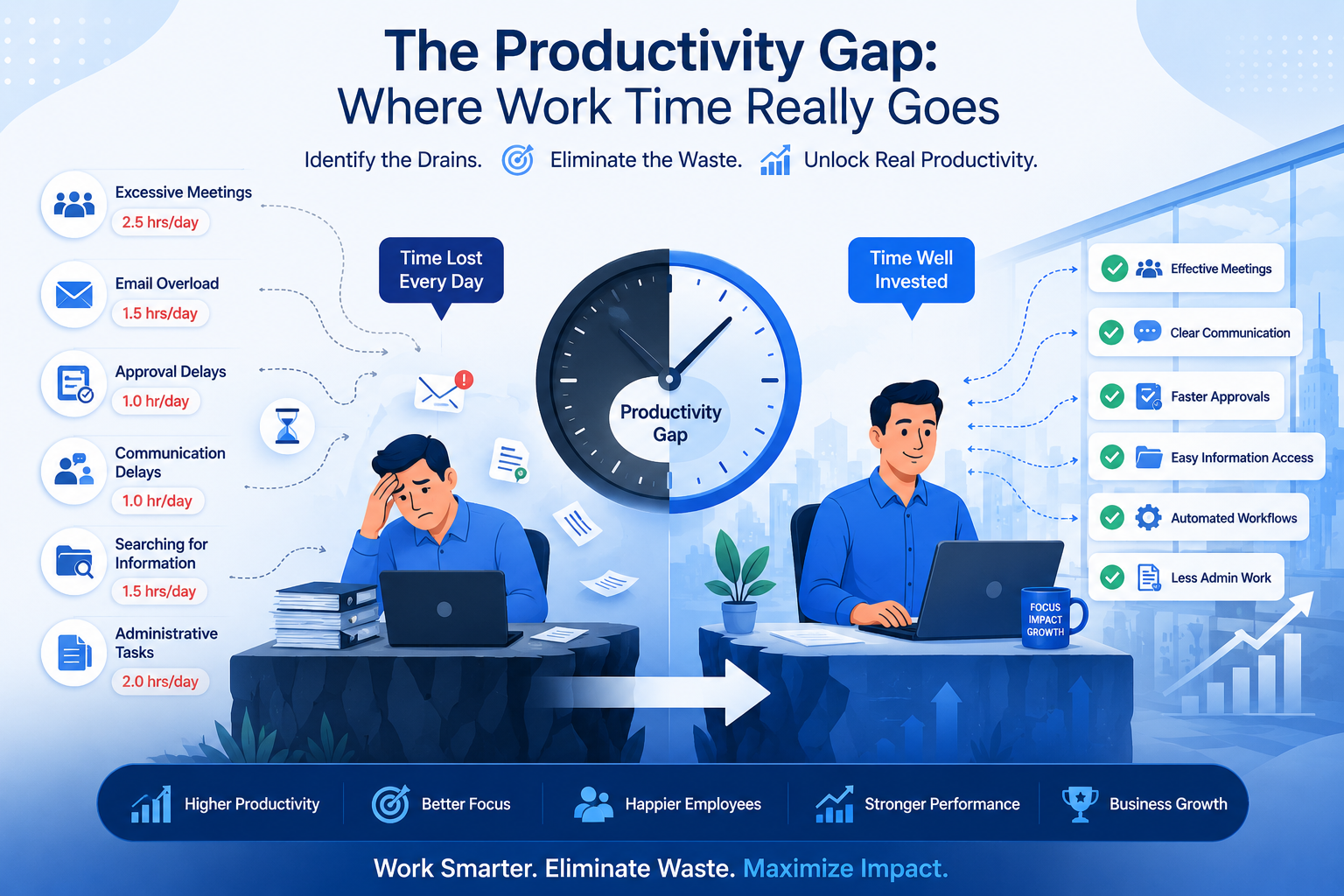
How Technology Improves Business Productivity
Modern workplace technologies help businesses:
- Reduce manual work
- Improve operational speed
- Simplify collaboration
- Improve communication
- Enhance visibility
- Support scalability
Businesses using smart digital systems often operate more efficiently and adapt faster to market changes.
Industries Benefiting from Workplace Technology
IT Companies
- Remote collaboration
- Workflow automation
- Secure communication
Retail Businesses
- Customer engagement
- Billing automation
- Inventory systems
Healthcare
- Employee coordination
- Secure reporting
- Digital communication
Manufacturing
- Vendor management
- Workflow monitoring
- Cost tracking
Corporate Businesses
- HR management
- Business analytics
- Centralized operations
Future of Workplace Technology
Future workplace systems are expected to focus more on:
- AI-powered automation
- Predictive analytics
- Smart collaboration
- Digital ecosystems
- Advanced cybersecurity
- Intelligent workflow systems
Businesses investing in workplace technology today are preparing for a smarter and more connected future.
Frequently Asked Questions (FAQs)
What is workplace technology?
Workplace technology includes digital systems and tools that help businesses improve operations, communication, productivity, and collaboration.
Why is workplace technology important?
It helps businesses improve efficiency, reduce manual work, support scalability, and improve employee productivity.
What are the biggest workplace technology trends in 2026?
Key trends include:
- Automation
- AI tools
- Hybrid work systems
- Secure communication
- Workflow automation
- Analytics platforms
How does automation improve productivity?
Automation reduces repetitive tasks, improves accuracy, and speeds up workflows.
Why are businesses investing in digital systems?
Businesses are adopting technology to improve operational efficiency, collaboration, customer experience, and scalability.
Is workplace technology useful for small businesses?
Yes. Small businesses can improve organization, productivity, and growth through smart digital systems.
Conclusion
Technology is transforming modern workplaces faster than ever before.
Businesses adopting smart workplace technologies are improving productivity, simplifying operations, supporting remote work, and building stronger digital infrastructure for future growth.
From automation and analytics to secure communication and workflow management, workplace technology is becoming essential for businesses of all sizes.
Organizations investing in digital transformation today are preparing for long-term success in the modern business world.
Explore Smart Digital Solutions
Looking for smarter ways to improve your business operations and workplace productivity?
Explore modern digital solutions for automation, communication, workflow management, and business productivity.
Explore More: https://i-spur.com/#products