Businesses today are operating in a fast-changing digital world where speed, efficiency, and customer experience matter more than ever. Companies that still rely heavily on manual processes, paperwork, and disconnected systems often struggle to keep up with growing operational demands.
This is why digital transformation has become essential for modern businesses.
Digital transformation is not just about using technology — it is about improving the way businesses operate, communicate, manage teams, and serve customers through smarter digital systems.
From HR management and workflow automation to communication, accounting, and customer engagement, businesses are adopting digital solutions to simplify operations and prepare for future growth.
What Is Digital Transformation?
Digital transformation means using technology to improve business processes, operations, and customer experiences.
Instead of relying on manual systems, businesses use digital tools to automate workflows, organize data, improve communication, and increase efficiency.
Digital transformation can include:
- HRMS software
- Workflow automation
- Secure communication platforms
- Accounts management systems
- Project management tools
- Digital customer engagement solutions
- Cloud-based operations
- QR technology
The goal is to create faster, smarter, and more organized business operations.
Why Businesses Are Moving Toward Digital Systems
Modern businesses handle large amounts of data, communication, and operational activities daily.
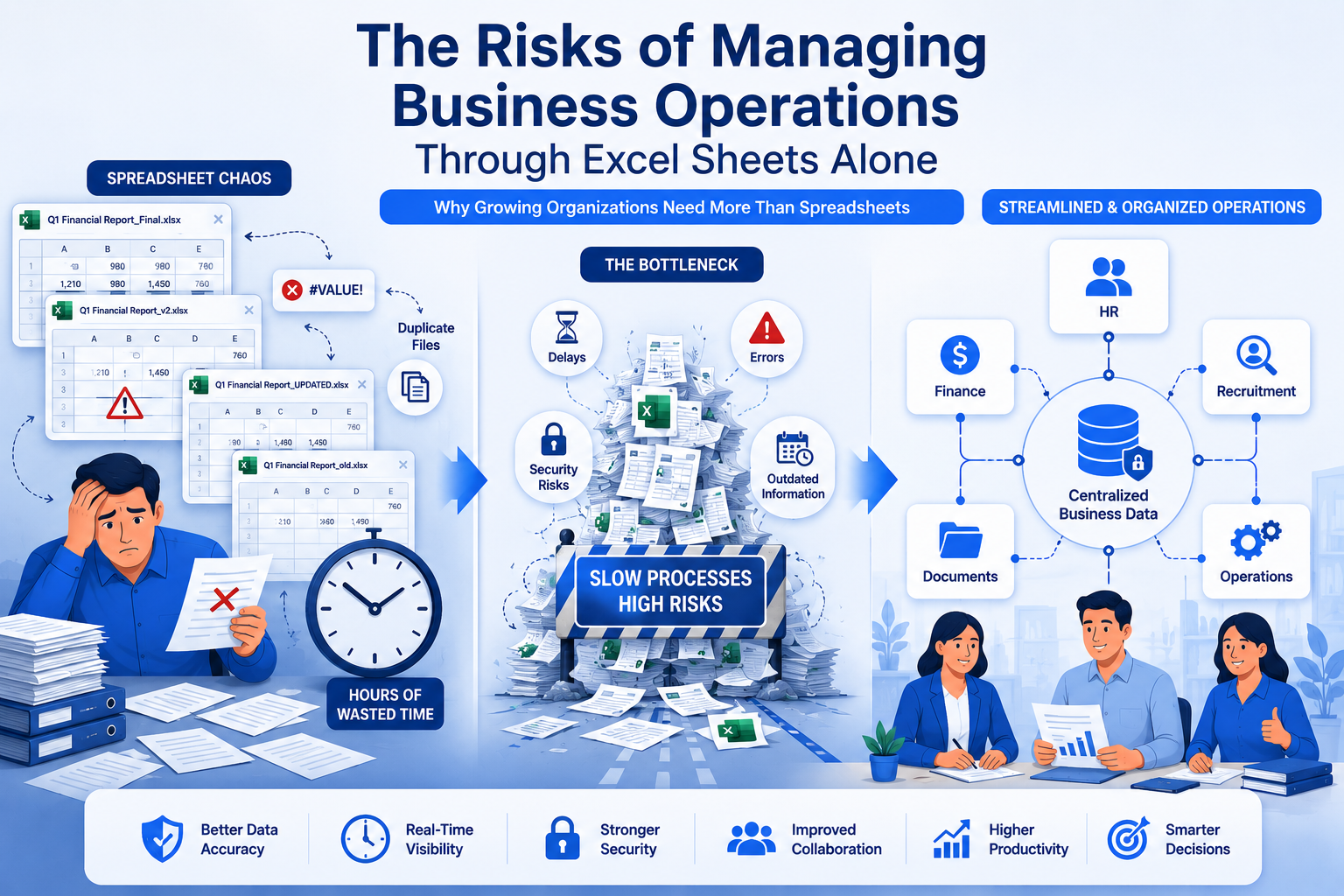
Manual systems often create:
- Slow workflows
- Communication delays
- Operational errors
- Poor data visibility
- Increased workload
- Difficulty scaling operations
Digital systems help businesses solve these challenges more efficiently.
Common Problems Businesses Face Without Digital Transformation
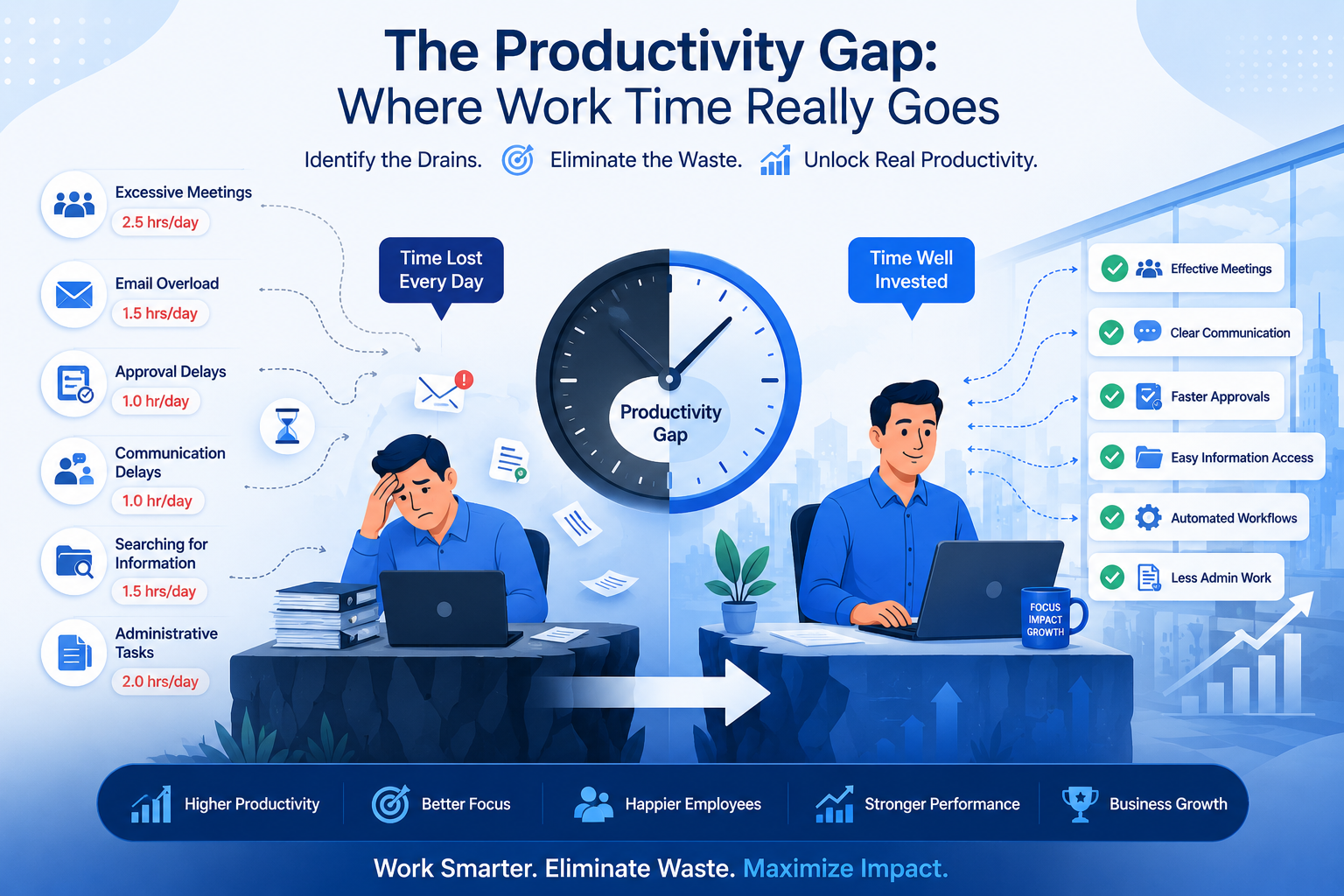
1. Manual Workload
Employees spend too much time handling repetitive tasks such as:
- Attendance tracking
- Payroll calculations
- Invoice processing
- Report generation
- Document management
This reduces productivity and wastes valuable time.
2. Disconnected Systems
Using multiple apps and spreadsheets often creates:
- Duplicate work
- Communication gaps
- Data inconsistency
- Operational confusion
Businesses need centralized systems that connect operations together.
3. Lack of Real-Time Visibility
Without digital tools, businesses struggle to track:
- Team performance
- Financial activities
- Project progress
- Operational efficiency
This affects decision-making and business growth.
4. Difficulty Managing Growth
As businesses expand, manual systems become harder to manage.
Digital transformation helps businesses scale operations more efficiently.
How Digital Transformation Improves Business Operations
Better Employee Management
Digital HR systems help businesses:
- Manage attendance
- Automate payroll
- Track employee performance
- Organize workforce operations
This improves HR efficiency and reduces administrative workload.
Faster Communication
Secure communication platforms help teams:
- Share updates instantly
- Collaborate efficiently
- Reduce delays
- Protect business information
Better communication improves productivity across departments.
Smarter Financial Management
Digital accounts systems help businesses manage:
- Invoices
- Vendor payments
- Budgets
- Purchase orders
- Financial reports
Automation improves accuracy and operational visibility.
Improved Workflow Management
Project and workflow systems help businesses:
- Assign tasks
- Monitor deadlines
- Track progress
- Improve coordination
This creates more organized operations.
Better Customer Engagement
Modern businesses use:
- QR technology
- Digital landing pages
- Smart customer access systems
to improve customer interaction and digital experiences.
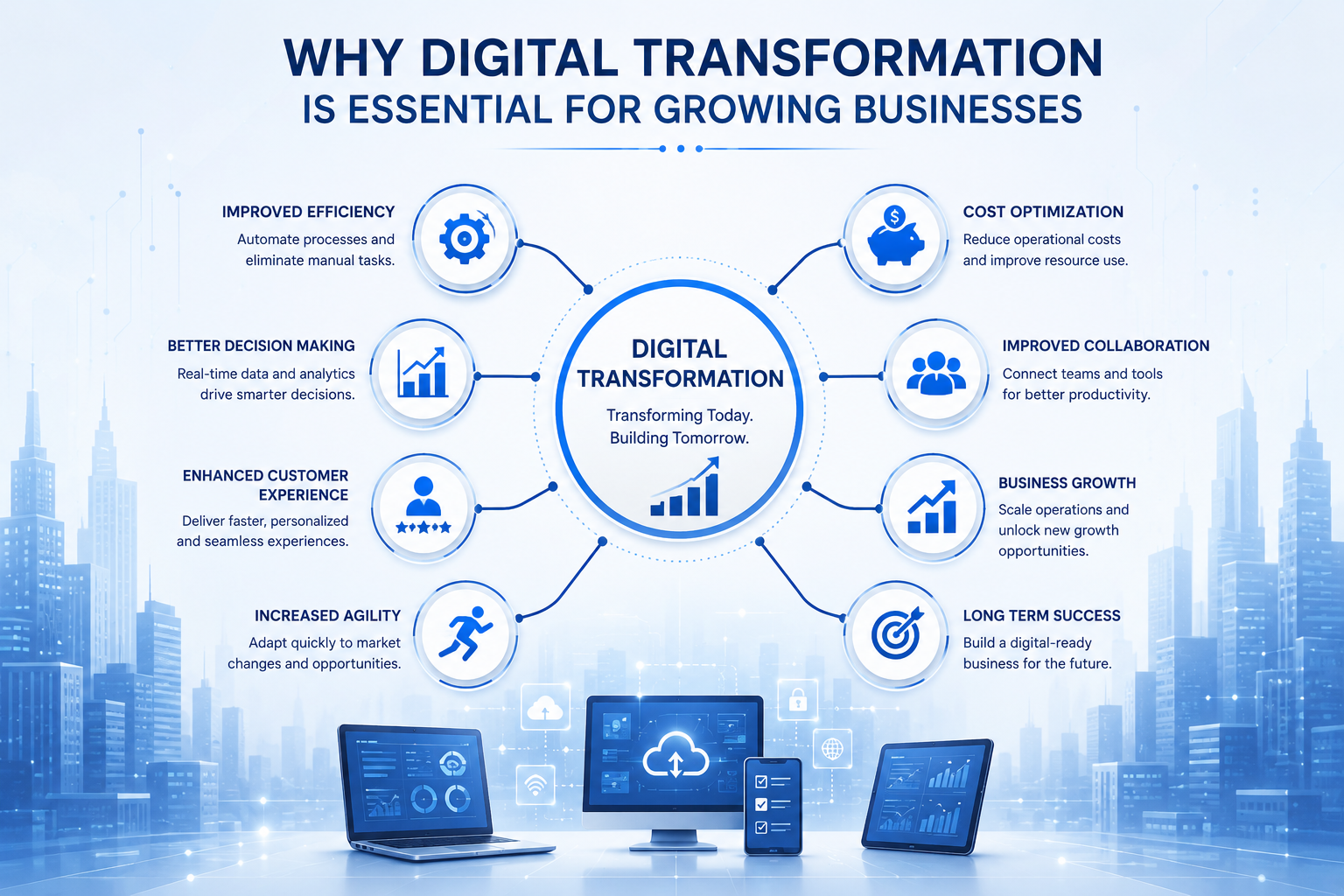
Benefits of Digital Transformation
Improves Productivity
Automation reduces repetitive tasks and helps employees focus on more important work.
Saves Time
Digital systems simplify workflows and reduce manual processing time.
Reduces Errors
Automation improves accuracy in:
- Payroll
- Reporting
- Accounts
- Attendance
- Data management
Better Decision-Making
Real-time dashboards and analytics provide better operational visibility.
Supports Business Growth
Digital systems help businesses scale operations more effectively.
Industries Benefiting from Digital Transformation
Retail
- Inventory management
- Customer engagement
- Billing automation
IT Companies
- Project tracking
- Team collaboration
- HR management
Manufacturing
- Workflow automation
- Vendor management
- Budget tracking
Healthcare
- Employee management
- Secure communication
- Reporting systems
Corporate Businesses
- Centralized operations
- Financial management
- Internal communication
Technologies Driving Digital Transformation
Modern businesses are using technologies such as:
- AI-powered automation
- HRMS systems
- Cloud platforms
- QR systems
- Workflow software
- Secure messaging tools
- Data analytics platforms
These technologies help businesses become more efficient and future-ready.
Why Digital Transformation Matters in 2026
Customer expectations and business operations are becoming increasingly digital.
Businesses that invest in digital transformation today are improving:
- Operational efficiency
- Team collaboration
- Customer experience
- Business scalability
- Competitive advantage
Companies relying entirely on manual systems may struggle to compete in modern markets.
Frequently Asked Questions (FAQs)
What is digital transformation?
Digital transformation means using technology to improve business operations, workflows, and customer experiences.
Why is digital transformation important?
It helps businesses improve productivity, reduce manual work, increase efficiency, and support future growth.
Which areas should businesses digitize first?
Businesses should prioritize:
- HR operations
- Communication
- Financial management
- Workflow tracking
- Customer engagement
Does digital transformation reduce operational costs?
Yes. Automation reduces repetitive tasks, improves efficiency, and minimizes operational errors.
Is digital transformation suitable for small businesses?
Yes. Small businesses can improve organization, productivity, and scalability through digital systems.
What technologies support digital transformation?
HRMS software, workflow automation, analytics systems, secure communication tools, and digital management platforms support digital transformation.
Conclusion
Digital transformation is no longer just a trend — it is becoming a business necessity.
Modern businesses need smarter systems to manage operations, improve productivity, simplify workflows, and support long-term growth.
From employee management and communication to accounts and workflow automation, digital solutions are helping businesses operate faster, smarter, and more efficiently.
Businesses investing in digital transformation today are building stronger foundations for future success.
Explore Smart Digital Business Solutions
Looking for smarter ways to transform your business operations?
Explore modern digital solutions for HRMS, communication, workflow management, accounts, QR systems, and business automation.
Explore More: https://i-spur.com/contact